



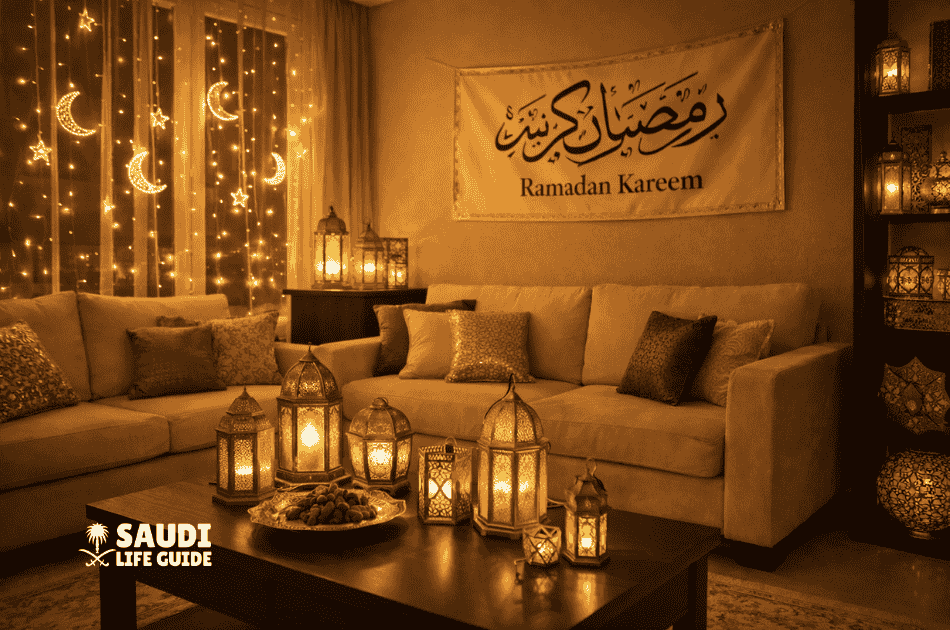
When I experienced my first Ramadan in Saudi Arabia, I made the rookie mistake of walking into Jarir Bookstore three days before Ramadan started, expecting to find decent decoration options.
The shelves were practically bare.
A Saudi colleague laughed and said, “You needed to shop two weeks ago—everyone decorates early here.” That’s when I learned that Ramadan decorating in Saudi Arabia isn’t just about hanging a few lanterns; it’s a deeply cultural tradition that transforms homes, offices, malls, and entire neighborhoods into magical spaces filled with crescents, stars, and the warm glow of fanoos lights.
Whether you’re an expat wanting to respectfully participate in Ramadan traditions, a non-Muslim looking to show cultural appreciation, or simply curious about where Saudis actually buy all those beautiful decorations you see everywhere, this guide covers everything based on real shopping experiences across Riyadh, Jeddah, and Dammam.
Why Ramadan Decorations Matter in Saudi Arabia
Before we dive into shopping locations, it’s worth understanding why Ramadan decorations hold such significance in the Kingdom.
The Cultural Context:
In Saudi Arabia—home to Makkah and Madinah—Ramadan isn’t just observed; it’s celebrated with visible joy and anticipation. Decorating homes and public spaces serves multiple purposes:
- Marking sacred time: Decorations signal that Ramadan has arrived, creating a distinct atmosphere
- Building excitement for children: Similar to Christmas lights in Western countries, Ramadan decorations make the month special for kids
- Community participation: Even non-practicing families often decorate to participate in the collective cultural moment
- Hospitality preparation: Homes are decorated to welcome guests for iftar gatherings
What This Means for Expats:
Many expats in Saudi Arabia initially wonder if decorating for Ramadan is appropriate for non-Muslims. The short answer: absolutely yes, and it’s typically appreciated.
Decorating your home or office space for Ramadan shows:
- Cultural respect and interest
- Integration into Saudi society
- Thoughtfulness toward Muslim colleagues and neighbors
- Openness to learning about Islamic traditions
I’ve never met a Saudi colleague who found expat Ramadan decorating offensive—quite the opposite. Most find it genuinely touching when expats make the effort, especially when children are involved.
When to Buy Ramadan Decorations in Saudi Arabia
Timing is everything when shopping for Ramadan decorations in the Kingdom.
The Ramadan Decoration Shopping Timeline:
3-4 Weeks Before Ramadan (BEST TIME):
- Stores fully stocked with maximum variety
- Prices haven’t increased yet
- Popular items still available
- No crowds or rush
- Time to order online if needed
2 Weeks Before Ramadan:
- Still good selection in major stores
- Prices start creeping up slightly
- Popular designs begin selling out
- Manageable shopping experience
1 Week Before Ramadan:
- Limited selection remaining
- Prices at peak (sometimes 20-30% higher)
- Stores crowded with last-minute shoppers
- Best items already gone
- Online delivery may not arrive in time
During Ramadan:
- Mostly picked-over inventory
- Heavy discounts on unpopular items
- Not ideal unless you’re shopping for next year
Post-Ramadan (Eid Week):
- MASSIVE clearance sales (50-70% off)
- Perfect time to stock up for next year
- Stores eager to clear inventory
Pro Tip from Experience: Set a phone reminder for “6 weeks before Ramadan” each year. When it goes off, start casually browsing stores. By the time Ramadan is 3 weeks away, you’ll know exactly what you want and can shop strategically before the rush.
Where to Buy Ramadan Decorations: The Complete Store Guide
Based on extensive shopping experience across Saudi cities, here’s the honest breakdown of where expats actually find the best Ramadan decorations.
Option 1: Jarir Bookstore (Most Popular for Expats)
Why Expats Love Jarir:
- Familiar shopping experience (like Target or WHSmith)
- English-speaking staff
- Clean, organized displays
- Quality products that won’t fall apart
- Accepts all credit cards
- Easy return policy
What You’ll Find:
- Ramadan lantern sets (fanoos) in various sizes
- LED string lights with Islamic patterns
- Crescent and star decorations
- Ramadan banners and bunting
- Table centerpieces
- Kids’ activity books and crafts
- Pre-packaged decoration sets
Price Range:
- Small lantern sets: SAR 25-50
- Medium decoration packages: SAR 75-150
- Large elaborate sets: SAR 200-400
Locations: Jarir has branches in every major Saudi city. In Riyadh, check Granada Mall, Sahara Mall, or Riyadh Park. In Jeddah, head to Red Sea Mall or Mall of Arabia.
The Honest Assessment: Jarir is convenient and reliable, but you’re paying a premium for that convenience. Prices are typically 20-40% higher than traditional shops, but the quality and shopping experience justify it for many expats.
Option 2: Danube and Panda Supermarkets
Why These Work Well:
- You’re already shopping for groceries anyway
- Decent selection of basic decorations
- Reasonable prices
- Multiple neighborhood locations
What You’ll Find:
- String lights and LED decorations
- Paper lanterns and banners
- Plastic crescent moons and stars
- Basic table decorations
- Ramadan-themed disposable plates and napkins
- Gift wrapping supplies
Price Range:
- Budget-friendly: SAR 15-100 for most items
- Better value than Jarir for basic items
The Honest Assessment: Perfect for “good enough” decorating on a budget. Quality varies significantly—inspect items carefully before buying. Great for disposable party supplies and basic lighting.
Option 3: Extra Stores (Best for Electronics/Lighting)
Why Extra Stands Out:
- Excellent selection of LED lights and electrical decorations
- High-quality lighting options
- Modern, contemporary designs
- Professional display setups you can replicate
What You’ll Find:
- Sophisticated LED string lights
- Projection lights with Islamic patterns
- Programmable color-changing decorations
- Solar-powered outdoor lights
- Battery-operated candles
- Smart home-compatible options
Price Range:
- Mid to high-end: SAR 100-500+
- Premium quality electrical items
Locations: Extra Stores are in major malls across Saudi Arabia.
The Honest Assessment: If you want your decorations to look polished and contemporary rather than traditional and craft-store-ish, Extra is your best bet. Particularly great for compound residents wanting to decorate outdoor spaces.
Option 4: Traditional Souks and Wholesale Markets (Best Value)
Why Adventurous Expats Love These:
- Authentic Saudi shopping experience
- Prices 50-70% lower than retail stores
- Unique, traditional items you won’t find elsewhere
- Bulk buying options
Where to Go:
Riyadh:
- Al-Zal Market (traditional home goods)
- Batha Market (wholesale everything)
- Al-Dira Souq (traditional crafts)
Jeddah:
- Al-Alawi Market
- Gabel Street (affordable everything)
- Al-Balad (old Jeddah—gorgeous traditional items)
Dammam:
- Traditional Souq near Corniche
- Al Shatea Market
- Seiko market
What You’ll Find:
- Handmade lanterns
- Traditional fabric decorations
- Bulk string lights
- Wooden crescent moons
- Hand-painted ceramics
- Incense and bakhoor (traditional fragrance)
Price Range:
- Incredibly affordable: SAR 10-80 for most items
- Negotiation expected and welcomed
The Challenges:
- Very crowded, especially close to Ramadan
- Limited English (bring Google Translate)
- Cash-preferred (some don’t accept cards)
- Need to inspect quality carefully
- Parking can be nightmarish
Pro Shopping Tips:
- Go with a Saudi friend if possible
- Visit mornings (cooler, less crowded)
- Bring cash in small denominations
- Don’t be afraid to negotiate (politely)
- Start with a price 30-40% lower than asking
The Honest Assessment: The souks offer the most authentic and affordable Ramadan shopping experience in Saudi Arabia. Yes, it’s chaotic and sometimes frustrating for expats used to organized retail, but the prices and unique finds make it worthwhile. Plus, it’s genuinely fun once you embrace the experience.
Option 5: Online Shopping (Best for Busy Expats)
Top Online Options:
1. Amazon.sa
- Wide selection of Ramadan decorations
- English interface
- Reliable delivery
- Customer reviews help with quality assessment
- Often cheaper than physical stores
- Free delivery on orders over SAR 200
2. Noon.com
- Large Ramadan decoration category
- Competitive pricing
- Fast delivery in major cities
- Good return policy
- Arabic and English options
3. Jarir.com
- Same inventory as physical stores
- Click-and-collect option
- Reliable but pricier
4. Instagram Shops and Small Businesses
- Search hashtags: #رمضانديكور #سعودية #RamadanDecorSaudi
- Many talented local artisans and small businesses
- Unique, handmade items
- Support local entrepreneurs
- Often customizable
- Message for pricing and delivery
Online Shopping Timeline:
- Order 3-4 weeks before Ramadan for guaranteed delivery
- Expect delays during Ramadan itself
- Check seller ratings carefully
- Read Arabic reviews using Google Translate (they’re often more detailed)
Option 6: IKEA (Minimalist/Modern Aesthetic)
Why IKEA Works: While IKEA doesn’t sell explicitly Islamic decorations, many expats in Saudi Arabia creatively use IKEA products:
Adaptable Items:
- String lights (IKEA’s fairy lights work beautifully)
- Lanterns (Swedish lanterns can pass as fanoos with the right styling)
- Star decorations (perfect for Ramadan)
- Candle holders and tea lights
- Fabric and textiles in appropriate colors (gold, green, white)
The DIY Approach: Buy IKEA basics + add Islamic elements from souks = unique, modern Ramadan aesthetic
Price Range:
- Very affordable: SAR 20-150 for most useful items
Essential Ramadan Decorations: What to Actually Buy
If you’re decorating for the first time, here’s what actually makes an impact without going overboard.
The Starter Kit (SAR 150-250 budget):
- String Lights (SAR 40-80)
- LED lights in warm white or gold
- Battery or plug-in options
- Drape across windows, doorways, or outdoor spaces
- 1-2 Fanoos Lanterns (SAR 50-120)
- The iconic Ramadan symbol
- Electric or battery-powered
- Place near entrance or on dining table
- Crescent Moon & Stars Set (SAR 30-60)
- Hanging or standing
- Window decals or 3D decorations
- Visible from outside
- Bunting or Banner (SAR 20-40)
- “Ramadan Mubarak” or “Ramadan Kareem” in Arabic/English
- Easy to hang
- Adds instant festive feel
Total Investment: SAR 140-300 Impact Level: Respectful and festive without overwhelming
The Full Experience (SAR 400-600 budget):
Add to starter kit:
- Multiple lantern sizes for layered look
- Table centerpieces
- Outdoor pathway lights
- Decorative cushions with Ramadan themes
- Ramadan calendar for kids (if applicable)
- Bakhoor/incense holder (for traditional scent)
The Expat Compound Setup:
Many expats living in Western compounds go all-out with outdoor decorations:
- Solar-powered garden lights with Islamic patterns
- Large crescent moon for roof or balcony
- Projection lights on exterior walls
- LED curtain lights on windows
- Entrance wreath or door decoration
Budget: SAR 600-1,000+ Effect: Visible community participation, beautiful for kids
Color Schemes and Design Aesthetics
Understanding traditional Ramadan color palettes helps your decorations look intentional rather than random.
Traditional Ramadan Colors:
Gold/Metallic:
- Most common and versatile
- Represents light and prosperity
- Works in any home style
Green:
- Significant in Islamic tradition
- Often combined with gold
- Fresh and vibrant
Deep Purple/Burgundy:
- Rich and elegant
- Popular in recent years
- Sophisticated look
White/Cream:
- Pure and peaceful
- Modern aesthetic
- Works well in minimalist homes
Turquoise/Teal:
- Middle Eastern traditional color
- Beautiful with gold accents
- Less common but stunning
Color Combinations That Work:
- Gold + White (classic and elegant)
- Green + Gold (traditional and festive)
- Purple + Gold (luxurious)
- Turquoise + Gold (unique and beautiful)
- All-white with warm lighting (modern minimalist)
What to Avoid:
- Christmas colors (red and green together)
- Overly bright neon colors
- Black as a dominant color (though acceptable as accent)
DIY Ramadan Decorations: Budget-Friendly Options
Many expats in Saudi Arabia create beautiful decorations without spending much, especially those with kids who love crafts.
Simple DIY Ideas:
1. Paper Lantern Garland
- Buy colored cardstock from Jarir (SAR 15)
- Print free lantern templates online
- Cut, fold, add string lights inside
- Total cost: SAR 25-40
- Kids love helping with this
2. Crescent Moon Wall Art
- Buy foam board from art supply store
- Trace and cut crescent shape
- Cover with gold wrapping paper or paint
- Add LED strip light around edge
- Hang on wall
- Total cost: SAR 30-50
3. Mason Jar Lanterns
- Use glass jars or buy cheap ones
- Paint with glass paint or wrap with tissue paper
- Add tea lights or LED candles
- Tie with ribbon
- Total cost: SAR 20-40
4. Ramadan Countdown Calendar
- Create 30 small envelopes or bags
- Number 1-30
- Fill with dates, chocolates, or small toys for kids
- Hang on string with clothespins
- Total cost: SAR 50-80
5. Window Stars
- Cut star shapes from colored paper
- Attach to windows with removable tape
- Layer different sizes
- Catches light beautifully
- Total cost: SAR 10-20
Where to Get Craft Supplies:
- Jarir (art section)
- Art supply shops in souks
- Danube (basic craft supplies)
- IKEA (surprising good craft basics)
Cultural Etiquette: Decorating Respectfully as an Expat
While decorating for Ramadan is appreciated, there are some cultural considerations expats should keep in mind.
Do’s:
- ✅ Decorate your home, apartment, or private space as elaborately as you’d like
- ✅ Include children in decorating if you have kids—Saudis love seeing families participate
- ✅ Use traditional symbols respectfully: crescents, stars, lanterns, Islamic geometric patterns
- ✅ Display “Ramadan Mubarak” or “Ramadan Kareem” banners (both Arabic and English are fine)
- ✅ Decorate your workspace if you work with Saudi colleagues (they’ll appreciate the gesture)
- ✅ Light up your decorations at night during Ramadan evenings
- ✅ Ask Saudi neighbors or colleagues for decoration tips—they’re usually thrilled to share
Don’ts:
- ❌ Don’t use Quranic verses as decorations unless you deeply understand their significance and proper handling (this is generally reserved for mosques and religious spaces)
- ❌ Don’t mix Ramadan decorations with other religious holiday items (no Christmas-Ramadan mashups)
- ❌ Don’t leave decorations up for months after Ramadan ends (typically taken down after Eid)
- ❌ Don’t use decorations that depict human or animal figures (Islamic tradition discourages this)
- ❌ Don’t make decorations the focus if you’re hosting iftar—the gathering itself is what matters
The Gray Area: Ramadan Trees
Some modern Saudi families have started putting up “Ramadan trees”—essentially Christmas-tree-style structures decorated with Ramadan ornaments. This is a newer, somewhat controversial trend.
Expat Advice: Skip the Ramadan tree unless you see your Saudi neighbors doing it first. Stick with traditional decorations to be safe.
Decorating in Different Living Situations
Your decoration approach will vary depending on your housing situation in Saudi Arabia.
For Apartment Dwellers:
Focus Areas:
- Living room and dining area (main gathering spaces)
- Windows (visible from outside, shows participation)
- Entryway (welcoming guests)
- Children’s rooms (if applicable)
Space-Saving Ideas:
- Window decals instead of hanging decorations
- Wall-mounted lanterns instead of table ones
- String lights on curtain rods
- Removable hooks for hanging items
Landlord Considerations:
- Use damage-free hanging methods
- Avoid permanent fixtures
- Check lease for restrictions on exterior decorations
For Villa/House Residents:
Expand to:
- Exterior entrance
- Garden or courtyard
- Majlis (if you have one)
- Outdoor dining spaces
- Roof or balcony
Outdoor Decoration Ideas:
- Solar pathway lights
- Large illuminated crescent on roof
- String lights on trees or pergolas
- Entrance wreath or door decoration
For Compound Living:
Compound Culture: Many Western compounds in Saudi Arabia have Ramadan decoration competitions or community decorating events.
Go Bigger:
- Elaborate exterior lighting
- Garden features
- Coordinated with neighbors
- Kid-friendly interactive elements
Check with Compound Management:
- Some compounds have decoration guidelines
- May provide communal decoration areas
- Sometimes organize decoration contests with prizes
For Office Spaces:
Workplace Decorating: If you work with Saudi colleagues, decorating your office or desk area is a thoughtful gesture.
Appropriate Office Decorations:
- Small desk lantern
- Ramadan-themed calendar
- Subtle string lights
- Banner in common area (ask permission first)
Coordinate with Colleagues:
- Don’t out-decorate Saudi colleagues (keep it humble)
- Offer to help with communal decoration
- Participate in office decoration activities
Storing and Reusing Ramadan Decorations
Since Ramadan moves earlier by about 10-11 days each year (lunar calendar), you’ll get good mileage from quality decorations.
Storage Tips:
Invest in Proper Storage:
- Clear plastic bins from IKEA or Extra Stores (SAR 30-60)
- Label clearly: “Ramadan Decorations”
- Store in cool, dry place (Saudi heat can damage items)
Protect Lights and Electricals:
- Keep original packaging if possible
- Wrap lights around cardboard to prevent tangling
- Test before storing (easier to replace while available)
Extend Decoration Lifespan:
- Buy quality over quantity
- Avoid direct sunlight exposure
- Clean before storing
- Keep batteries removed from battery-operated items
When to Replace:
- LED lights typically last 2-3 Ramadans with regular use
- Paper decorations: usually single-season
- Quality lanterns and fabric items: 5+ years
- Plastic items: 3-4 years
Post-Ramadan Sales Strategy: Many experienced expats in Saudi Arabia shop the post-Eid clearance sales for next year’s decorations. You can save 50-70% by planning ahead.
Ramadan Decorations for Kids: Making It Special
If you have children in Saudi Arabia, Ramadan decorations take on extra significance.
Kid-Friendly Decoration Ideas:
1. Ramadan Advent Calendar
- 30 days of small surprises
- Build anticipation daily
- Can include dates, chocolates, small toys, or activity cards
2. “Good Deeds” Tree
- Paper tree on wall
- Kids add leaves for good actions
- Combines decoration with values
3. Prayer Tracking Chart
- Decorated chart for marking daily prayers (for Muslim families)
- Sticker-based rewards
- Visually appealing
4. Craft Station
- Dedicate table space for ongoing Ramadan crafts
- Create new decorations throughout the month
- Display kids’ artwork
5. Lighting Ceremony
- Make turning on Ramadan lights a nightly ritual
- Kids’ responsibility to light up decorations after iftar
- Creates special memories
Where Kids Can Help:
- Hanging paper decorations
- Arranging lanterns (battery-operated)
- Creating homemade banners
- Decorating their own rooms
- Making cards for neighbors
Safety Reminder:
- Battery-operated lights safer than plug-in for kids’ rooms
- Avoid candles (even LED ones can get hot)
- Secure hanging items that could fall
- Keep small decoration parts away from very young children
Budget Breakdown: What Expats Actually Spend
Based on conversations with dozens of expats across Saudi Arabia, here’s what people typically spend on Ramadan decorations:
Minimalist Approach (SAR 100-200):
- “I just want to show I care”
- Basic lights and one lantern
- Mostly shopping at Danube/Panda
- Single room decoration focus
Standard Expat Approach (SAR 300-500):
- “I want it to feel special”
- Multiple rooms decorated
- Mix of Jarir and souk shopping
- Includes some outdoor elements
Enthusiastic Approach (SAR 600-1,000):
- “We want the full experience”
- Whole house decorated inside and out
- Quality items that last multiple years
- Includes special features (projection lights, elaborate lanterns)
Compound Show-Stopper (SAR 1,000-2,000+):
- “We’re going all out”
- Exterior house lighting
- Landscaping elements
- Custom or handmade pieces
- Often participating in compound competitions
The Practical Reality: Most expats spend SAR 300-600 in their first year, then add SAR 100-200 in new items each subsequent year as they build a collection.
Common Mistakes Expats Make with Ramadan Decorations
Learn from others’ experiences:
Mistake #1: Waiting Too Long to Shop By 10 days before Ramadan, good decorations are mostly gone. Shop early.
Mistake #2: Buying Too Much It’s easy to get carried away. Start modest—you can always add more next year.
Mistake #3: Ignoring Quality Cheap decorations fall apart quickly in Saudi heat. Invest in decent quality for lights and electrical items.
Mistake #4: Forgetting Outdoor Spaces In Saudi Arabia, outdoor decoration matters because neighbors see it. Don’t neglect your entrance or windows.
Mistake #5: Not Involving Kids If you have children, decorating together creates memories. Don’t rob them of that experience by doing it alone or hiring someone.
Mistake #6: Overdoing Religious Symbols Unless you’re Muslim and understand the significance, stick with cultural symbols (lanterns, crescents, stars) rather than religious calligraphy or Quranic verses.
Mistake #7: Keeping Decorations Up Too Long Take decorations down within a week after Eid. Leaving them up for months appears careless.
When Non-Muslims Decorate: The Reception from Saudis
One question expats ask constantly: “Will Saudis think I’m being fake or appropriative if I decorate for Ramadan?”
The Honest Reality:
In my experience and from talking with dozens of expats and Saudi colleagues, the response is overwhelmingly positive.
What Saudis Actually Think:
“It shows respect” — Most Saudi neighbors and colleagues see expat decoration as a genuine gesture of cultural participation and respect.
“It’s good for the children” — Saudis particularly appreciate when expat families decorate to help kids understand Ramadan.
“You’re part of the community” — Decorating signals that you’re not just passing through but actually integrating into Saudi society.
“It makes us feel welcome” — Many Saudis find it touching when expats embrace Ramadan traditions.
The Exception:
The only time decorating might be received poorly is if it’s clearly performative, excessive, or combined with disrespectful behavior (like eating publicly during fasting hours despite having decorations).
As long as your decorations reflect genuine interest and respect—not mockery or superficial virtue signaling—you’ll find Saudis genuinely appreciative.
Final Thoughts: Creating Your Ramadan Decoration Plan
Decorating for Ramadan in Saudi Arabia doesn’t need to be expensive, elaborate, or stressful. Whether you hang a single lantern or transform your entire villa, what matters most is the genuine intention behind it.
Start Simple: If this is your first Ramadan in Saudi Arabia, begin with:
- One or two lanterns
- String lights for your main window
- A “Ramadan Mubarak” banner
That’s enough to show respect and participation.
Grow Gradually: Each year, add a few new pieces. By your third or fourth Ramadan, you’ll have a beautiful collection without having spent a fortune at once.
Enjoy the Process: Shopping for Ramadan decorations, especially in traditional souks, is an adventure. Embrace the chaos, practice your Arabic greetings, and soak in the pre-Ramadan excitement that fills Saudi cities.
Remember the Purpose: Decorations are meant to mark something sacred and bring joy—they’re not about competition or perfection. A few thoughtfully placed items with genuine intention mean far more than an over-the-top display done out of obligation.
For more guidance on navigating your first Ramadan in Saudi Arabia—from fasting rules to workplace changes to cultural etiquette—check out our comprehensive Saudi Life for Expats Guide 2025, which covers everything you need to know about expat life in the Kingdom.
Ramadan Kareem, and happy decorating!
Where is the best place to buy Ramadan decorations in Saudi Arabia?
For expats, Jarir Bookstore offers the most convenient shopping experience with quality decorations, though prices are higher. Traditional souks offer the best prices (50-70% cheaper) and authentic items, but require more adventurous shopping.
When should I buy Ramadan decorations in Saudi Arabia?
Shop 3-4 weeks before Ramadan begins for the best selection and prices. One week before Ramadan, most popular items are sold out and prices increase by 20-30%. Post-Eid sales offer 50-70% discounts—perfect for buying decorations for next year.
How much should I expect to spend on Ramadan decorations in Saudi Arabia?
Most expats spend SAR 300-500 for a complete first-time setup including lights, lanterns, and banners. A minimal approach costs SAR 100-200.
What are the essential Ramadan decorations every expat should have?
Start with: (1) LED string lights in warm white or gold (SAR 40-80), (2) 1-2 fanoos lanterns (SAR 50-120), (3) crescent moon and stars (SAR 30-60), and (4) a “Ramadan Mubarak” banner (SAR 20-40). This SAR 140-300 starter kit creates a festive, respectful atmosphere.
