



Using a VPN in Saudi Arabia places expats in a complex legal grey zone. While VPN software itself isn’t explicitly banned, the Saudi government strictly prohibits using VPNs to access blocked content or bypass censorship. Many expats in Saudi Arabia use VPNs daily for work and security, but understanding the legal boundaries under the Anti-Cyber Crime Law is essential to avoid fines up to SR 1 million, imprisonment, or deportation.
Based on real expat experience in KSA, the critical distinction isn’t whether you have VPN software installed—it’s what you’re using it for. The Saudi Communications, Space & Technology Commission (CST, formerly CITC) and law enforcement focus enforcement on content accessed rather than the tool itself. This guide explains exactly what’s legal, what’s risky, and how to protect yourself while living in Saudi Arabia.
Understanding VPN Legal Status in Saudi Arabia
The legal status of VPN in Saudi Arabia is not black and white. VPN usage exists in what many expats call a “tolerated but monitored” category. According to Global Web Index estimates, approximately 29% of Saudi Arabians accessed the internet through a VPN in the past month, indicating widespread use despite regulatory concerns.
What makes VPN usage complicated in Saudi Arabia:
The Saudi government doesn’t explicitly criminalize having VPN software on your device. However, the Anti-Cyber Crime Law of 2007 strictly prohibits using any technical tool—including VPNs—to access content deemed illegal in the Kingdom or to commit cybercrimes.
Many expats in Saudi Arabia report using VPNs for years without issues when employed exclusively for legitimate business purposes, banking security, or general privacy protection. The enforcement priority focuses on what you’re accessing, not merely that you’re using encryption software.
The current enforcement reality:
Saudi authorities distinguish between corporate VPN users connecting to international business systems and individuals deliberately circumventing content restrictions. Companies operating in Saudi Arabia regularly use VPNs for secure communications, and these legitimate business applications are generally accepted practice.
According to FreedomHouse’s 2024 assessment, Saudi Arabia’s internet freedom scores 24 out of 100, categorizing it as “Not Free”, which explains why VPN usage remains controversial despite its practical necessity for many expats and businesses.
While adjusting to life in Saudi Arabia, expats learn that the Kingdom follows unique cultural and legal practices. Just as Christmas isn’t recognized as a public holiday in Saudi Arabia due to Islamic calendar traditions, internet usage also operates under different rules than Western countries. Understanding and respecting these local norms—from holiday observances to online activities—helps expats navigate daily life successfully in KSA.
What Saudi Law Actually Says About VPNs
The Anti-Cyber Crime Law is the primary legislation governing VPN usage in Saudi Arabia. Understanding the specific articles is crucial for expats.
Article 3(4) – Accessing Blocked Websites:
According to Article 3(4) of the Anti-Cyber Crime Law, accessing blocked websites can result in penalties or fines up to SR 500,000. This article doesn’t mention VPNs specifically but applies to any method used to bypass Saudi internet restrictions.
Article 5 – Unauthorized Access:
The law stipulates that hacking, intercepting, or illegally receiving data transmitted through an information network without authorization carries imprisonment up to one year and fines not exceeding SR 500,000 LOC.
Article 6 – Content Violations:
Producing, transmitting, or storing material that impinges on public order, religious values, public morals, or privacy through an information network is subject to imprisonment up to five years and fines up to SR 3 million Mondaq.
What the law prohibits when using VPNs:
- Accessing pornographic content
- Gambling websites
- Content critical of Islam or Saudi governance
- VoIP services used to bypass telecom regulations (historically)
- Sites promoting terrorism or extremism
- Content violating Saudi cultural or moral standards
- Any website officially blocked by CITC/CST
Important legal clarification:
The Saudi government hasn’t passed legislation stating “VPNs are illegal.” Instead, the law prohibits certain online activities, and using a VPN to commit those activities compounds the violation by showing intent to hide illegal behavior.
Penalties and Fines for VPN Misuse in Saudi Arabia
Understanding the financial and legal consequences of misusing a VPN in Saudi Arabia is crucial for expats who want to remain in the Kingdom.
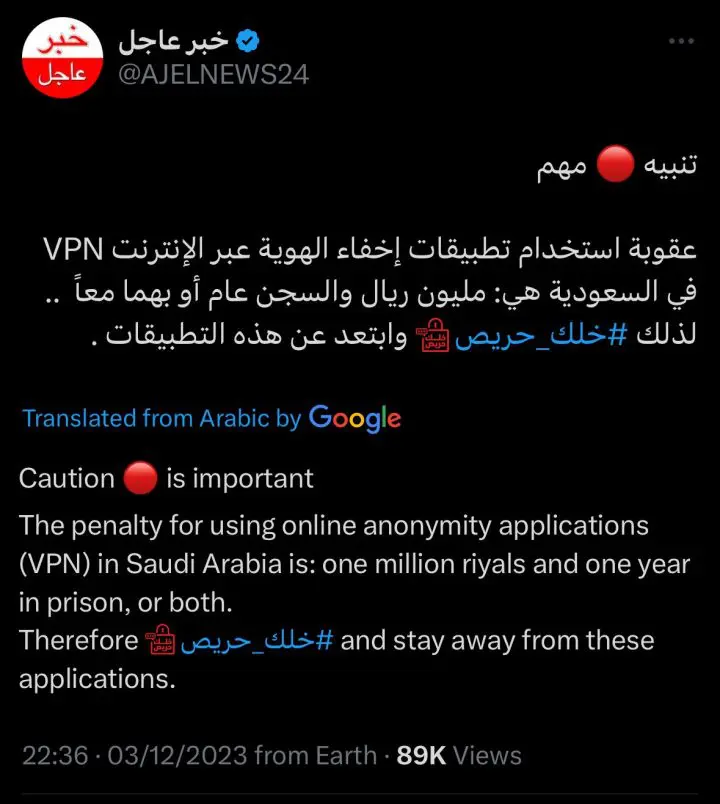
Current penalty structure (2025):
According to recent reports from Ajel News, using anonymous applications like VPNs for illegal purposes can result in fines up to SR 1 million, imprisonment up to one year, or both penalties combined.
Tiered penalty system based on violation severity:
Minor violations (First-time, unintentional access):
- Warnings and device inspection
- Fines: SR 10,000 – SR 100,000
- Mandatory deletion of prohibited content
- Temporary travel restrictions
Moderate violations (Accessing blocked content deliberately):
- Fines: SR 100,000 – SR 500,000
- Possible short-term detention
- Device confiscation
- Visa implications for expats
Serious violations (Repeated offenses, prohibited material distribution):
- Fines: SR 500,000 – SR 1 million
- Imprisonment: 6 months to 1 year
- Immediate deportation for expats
- Permanent entry ban
- Employment termination
Severe violations (Content threatening national security, terrorism-related):
- Imprisonment up to three years and fines up to SR 3 million for accessing networks to cancel, delete, destroy, leak, or redistribute private information LOC
- Up to five years imprisonment for producing or transmitting material impinging on religious values or public order
- Permanent deportation with no possibility of return
Additional consequences for expats:
Your sponsor (employer) may face scrutiny or pressure from authorities, affecting your professional reputation and future employment prospects in Saudi Arabia and potentially across the Gulf Cooperation Council (GCC) countries.
Legal proceedings in Saudi Arabia are conducted in Arabic, requiring professional legal representation that can cost SR 30,000-100,000+ depending on case complexity.
Legitimate VPN Uses That Are Generally Accepted in Saudi Arabia
Based on real expat experience in KSA, certain VPN in Saudi Arabia applications are widely accepted and rarely result in legal issues.
1. Corporate and Business VPN Access
Most international companies require employees to connect through VPNs to access:
- Secure company intranets and internal systems
- Confidential business databases
- Corporate email servers
- Cloud-based business applications
- International collaboration tools
Many expats in Saudi Arabia working for multinational corporations in sectors like oil and gas, consulting, finance, and technology use corporate VPNs daily. Saudi authorities generally understand this business necessity, and company-provided VPNs for work purposes represent the safest category of VPN usage.
Important: Company VPNs should only be used for work-related activities. Using corporate VPNs for personal browsing, especially accessing prohibited content, can result in both legal consequences and immediate employment termination.
2. Banking and Financial Security
Accessing international banking websites, investment platforms, and financial accounts through VPNs for security purposes is generally accepted practice. Expats in Saudi Arabia maintaining financial relationships in their home countries need secure connections, particularly when using:
- Public WiFi at hotels, cafes, or airports
- Mobile data networks
- Shared internet connections
This protective use demonstrates responsible digital security rather than attempting to bypass content restrictions.
3. General Privacy and Cybersecurity Protection
Using VPNs to protect personal data represents legitimate digital hygiene. In Saudi Arabia, this includes:
- Encrypting sensitive personal communications
- Protecting against data theft on public networks
- Securing online shopping transactions
- Preventing unauthorized tracking
4. Accessing Geo-Restricted Home Country Services
This category remains somewhat ambiguous. Many expats use VPNs to access:
- Netflix, Amazon Prime, or streaming services from home countries
- International news websites
- Regional sports broadcasts
- Online banking platforms that restrict access from certain countries
While Saudi authorities haven’t actively pursued individuals specifically for this use, it exists in a grey area. The practical reality is that enforcement focuses on accessing explicitly prohibited content rather than region-locked entertainment.
VPN Uses That Will Get You in Legal Trouble
Certain applications of VPN in Saudi Arabia will almost certainly result in serious legal consequences. Every expat must understand these prohibited uses.
1. Accessing Blocked Websites
The Communications and Information Technology Commission (CITC), now the Communications, Space & Technology Commission (CST), maintains extensive lists of blocked websites. Using VPNs specifically to access these sites violates Saudi cyber law.
Blocked categories include:
- Adult/pornographic content (zero tolerance)
- Gambling platforms
- Content critical of Saudi governance or leadership
- Websites deemed offensive to Islam
- Political opposition platforms
- Dating websites (many are blocked)
2. VoIP Services to Bypass Telecom Regulations
Historically, Saudi Arabia restricted VoIP services like Skype, Viber, and others to protect telecom revenue. While WhatsApp calling became legal in recent years, using VPNs to bypass telecom systems for unauthorized calling services remains problematic.
Current status (2025):
- WhatsApp voice/video: Legal and functional
- FaceTime: Accessible without restrictions
- Skype, Zoom, Microsoft Teams: Generally accessible for business use
- Other VoIP services: Verify current legal status before use
3. Downloading or Distributing Pirated Content
Using VPNs to download pirated movies, software, music, or any copyrighted material compounds legal violations. Saudi Arabia enforces intellectual property laws, and VPN usage becomes evidence of intentional circumvention.
4. Social Media Activity Violating Saudi Laws
Using VPNs to post content critical of:
- Saudi governance or leadership
- Islamic principles or values
- Public order or morals
Saudi authorities actively monitor social media, and VPN usage won’t provide protection if your identity can be established through other means (device identifiers, payment methods, linked accounts).
5. Any Activity Illegal in Saudi Arabia
VPNs compound the seriousness of any illegal online activity:
- Online fraud or financial crimes
- Defamation or spreading false information
- Sharing prohibited materials
- Participating in unauthorized political activities
- Any form of cybercrime as defined by Saudi law
How Saudi Arabia Monitors and Blocks VPNs
Understanding how Saudi authorities detect and manage VPN in Saudi Arabia usage helps expats make informed decisions.
Deep Packet Inspection (DPI) Technology
Saudi telecom providers (STC, Mobily, Zain) employ sophisticated DPI systems that can:
- Identify VPN traffic patterns even when encrypted
- Distinguish between VPN protocols (OpenVPN, WireGuard, etc.)
- Detect unusual traffic routing
- Flag suspicious connection patterns
What this means for users:
DPI doesn’t automatically block VPNs or report users to authorities, but it provides technical capability for monitoring when needed. During heightened security periods or specific investigations, this technology enables detailed traffic analysis.
IP Address Blocking
The Saudi government blocks access to many VPN providers’ websites and servers in attempts to limit VPN use. The CST maintains dynamic lists of known VPN server IP addresses and blocks them periodically.
Practical implications:
- VPN performance in Saudi Arabia can be inconsistent
- Servers working today may fail tomorrow
- Premium VPN providers regularly rotate IP addresses
- Some providers maintain “obfuscated servers” specifically for restrictive countries
Website and Service Blocking
Many VPN provider websites are blocked within Saudi Arabia, making it advisable to download and subscribe to a VPN before traveling to the Kingdom.
Blocked or restricted VPN provider websites include:
- Many free VPN services
- Some mid-tier commercial providers
- VPN review and comparison sites
Active Enforcement Methods
Device inspections: At airports, checkpoints, or during routine police interactions, authorities may examine devices. Having VPN software installed typically isn’t problematic, but evidence of accessing prohibited content through browsing history, cached images, or saved files can trigger serious consequences.
ISP-level monitoring: Internet Service Providers must comply with government monitoring requirements. While everyday users aren’t individually tracked, suspicious patterns or specific investigations can trigger detailed analysis.
Complaint-driven investigations: Many VPN-related legal cases begin with reports from:
- Spouses or family members
- Business competitors
- Former friends or colleagues
- Automated content monitoring systems
Real Expat Experiences with VPNs in Saudi Arabia
Based on real expat experience in KSA, here’s what the expat community reports about using VPN in Saudi Arabia:
Corporate Users
Professionals working for international companies in Riyadh, Jeddah, Dammam, and Khobar consistently report using corporate VPNs without issues. Common sectors include:
- Oil and gas (Aramco contractors and partners)
- Consulting firms (Big 4, management consultancies)
- Technology companies
- Financial services
- Healthcare and pharmaceuticals
These expats emphasize strictly limiting VPN usage to work-related activities and avoiding any personal browsing through company systems.
Personal VPN Users
Many expats report using premium VPN services for:
- Streaming home country content (Netflix, BBC iPlayer, etc.)
- Accessing international news
- Secure online banking
- General privacy protection
Most describe years of usage without legal problems, attributing this to:
- Avoiding obviously prohibited content entirely
- Using reputable, paid VPN services
- Maintaining low profiles
- Never discussing VPN usage publicly
Practical Safety Guidelines for Expats Using VPNs
If you choose to use a VPN in Saudi Arabia, follow these experience-backed safety practices:
1. Choose Premium VPN Providers
Free VPNs pose significant risks:
- Often sell user data to third parties
- Provide inadequate encryption
- May log your activities
- Frequently fail or have poor performance
Recommended characteristics for Saudi Arabia:
- Verified no-logs policy
- Strong encryption (AES-256)
- Kill switch functionality
- Obfuscated servers
- RAM-only servers (no data storage)
- Established reputation and transparent ownership
2. Download Before Arriving in Saudi Arabia
Many VPN provider websites are blocked within Saudi Arabia, so the wisest approach is subscribing and downloading VPN software before traveling to the Kingdom.
Pre-arrival checklist:
- Subscribe to VPN service
- Download apps for all devices
- Test functionality before departure
- Save customer support contact information
- Document your account details securely
3. Limit VPN Usage to Legitimate Purposes
Frame your VPN usage around clearly acceptable needs:
- Corporate work requirements
- Banking and financial security
- Personal data protection on public networks
- Accessing non-prohibited home country services
4. Never Access Prohibited Content
Regardless of VPN protection, absolutely avoid:
- Adult content
- Gambling sites
- Content critical of Saudi governance or Islam
- Any website you know is blocked
- Pirated materials
Critical understanding:
VPN usage won’t protect you if authorities determine you’ve accessed illegal content. Saudi law enforcement has sophisticated methods for attribution that go beyond simple IP tracking.
5. Separate Corporate and Personal VPN Usage
Never:
- Use company VPNs for personal activities
- Access personal accounts through corporate VPN
- Mix work and personal browsing
Maintain:
- Dedicated personal VPN if needed
- Complete separation of usage contexts
- Clear understanding of employer policies
6. Stay Informed About Regulation Changes
Saudi digital regulations evolve continuously. Monitor changes through:
- Official CST announcements
- Expat community forums
- Embassy communications
- Trusted news sources
7. Exercise Digital Discretion
- Don’t discuss VPN usage publicly or on social media
- Avoid recommending VPNs to others
- Never help others bypass restrictions
- Maintain awareness that online activities in Saudi Arabia carry different legal implications than in your home country
What Happens If Authorities Catch You Misusing VPNs
Understanding potential consequences helps expats in Saudi Arabia assess risks accurately.
Initial Detection and Investigation
How cases typically begin:
- Device inspection at checkpoint or airport
- Complaint or report from third party
- Monitoring of suspicious online activity
- Workplace IT security alerts
- Random cybercrime investigations
Investigation Process
What authorities examine:
- Browsing history and cached content
- Downloaded files and saved images
- App installation history
- Connected accounts and services
- Payment records for VPN services
- Communication history
Legal Proceedings
Process for expats:
- Initial detention for questioning
- Device confiscation for forensic analysis
- Notification to sponsor (employer)
- Potential travel restrictions
- Legal representation requirement
- Court proceedings in Arabic
- Verdict and sentencing
Consequences by Severity
Minor violations:
- Warnings and educational counseling
- Small fines (SR 5,000 – SR 50,000)
- Device content deletion
- Release with monitoring
Moderate violations:
- Substantial fines (SR 50,000 – SR 500,000)
- Brief detention periods
- Visa complications
- Sponsor pressure for voluntary departure
Serious violations:
- Major fines (SR 500,000 – SR 1 million+)
- Imprisonment (months to years)
- Immediate deportation
- Permanent entry ban
- Employment blacklisting
Impact on Professional Life
Career consequences:
- Immediate contract termination
- Difficulty obtaining future Gulf employment
- Professional reputation damage
- Potential home country implications
- Family visa cancellations
Financial Impact
Potential costs:
- Legal fees: SR 30,000 – SR 100,000+
- Fines: Up to SR 1 million
- Lost salary and benefits
- Emergency flight costs
- Family relocation expenses
- Difficulty securing future employment
Alternatives to VPNs in Saudi Arabia
Consider these alternatives before deciding you need a VPN in Saudi Arabia:
1. Officially Available Services
Many previously blocked services now function legally:
- WhatsApp voice and video calling
- FaceTime (full functionality)
- Most major streaming services
- International news websites
- Social media platforms
Verify current accessibility before assuming you need a VPN.
2. Mobile Data Over Public WiFi
Saudi mobile networks (STC, Mobily, Zain) offer:
- Fast 4G/5G coverage
- Reasonable data packages
- Better security than public WiFi
- No additional software needed
For sensitive transactions, mobile data provides adequate security without VPN complexity.
3. Smart DNS Services
For accessing geo-restricted streaming content:
- Smart DNS modifies DNS settings without full encryption
- Generally faster than VPNs
- Lower detection profile
- More limited functionality
Legal status: Occupies similar grey area as VPNs but attracts less scrutiny since no encryption or IP hiding is involved.
4. Proxy Services (Use with Extreme Caution)
Web proxies can access some blocked content but:
- Provide minimal security
- Often unreliable
- May log activities
- Can inject malware
- Generally not recommended for Saudi Arabia
5. Adaptation to Saudi Internet Environment
Many long-term expats simply:
- Accept Saudi internet restrictions
- Focus on available content
- Use alternative entertainment sources
- Avoid prohibited websites entirely
This approach eliminates all legal risk and represents the safest choice for expats prioritizing their ability to remain in Saudi Arabia
Frequently Asked Questions (FAQ)
Is using a VPN illegal in Saudi Arabia?
VPN software isn’t illegal, but using it to access blocked content violates the Anti-Cyber Crime Law with fines up to SR 1 million and one-year imprisonment.
What are the penalties for misusing VPNs in Saudi Arabia?
Penalties include fines from SR 500,000 to SR 1 million, imprisonment up to 5 years, immediate deportation for expats, and permanent entry bans depending on severity.
Can I use a VPN for work purposes in Saudi Arabia?
Yes, corporate VPNs for legitimate business access are accepted. Use them strictly for work-related activities only, never for personal browsing or blocked content.
Can Saudi authorities detect VPN usage?
Yes, Saudi ISPs use Deep Packet Inspection (DPI) technology to identify VPN traffic patterns. CST also blocks known VPN server IP addresses periodically.
Are there alternatives to using VPNs in Saudi Arabia?
Yes. Use mobile data for security, access now-legal services like WhatsApp calling and FaceTime, or use Smart DNS for geo-restricted streaming content.
