



Introduction
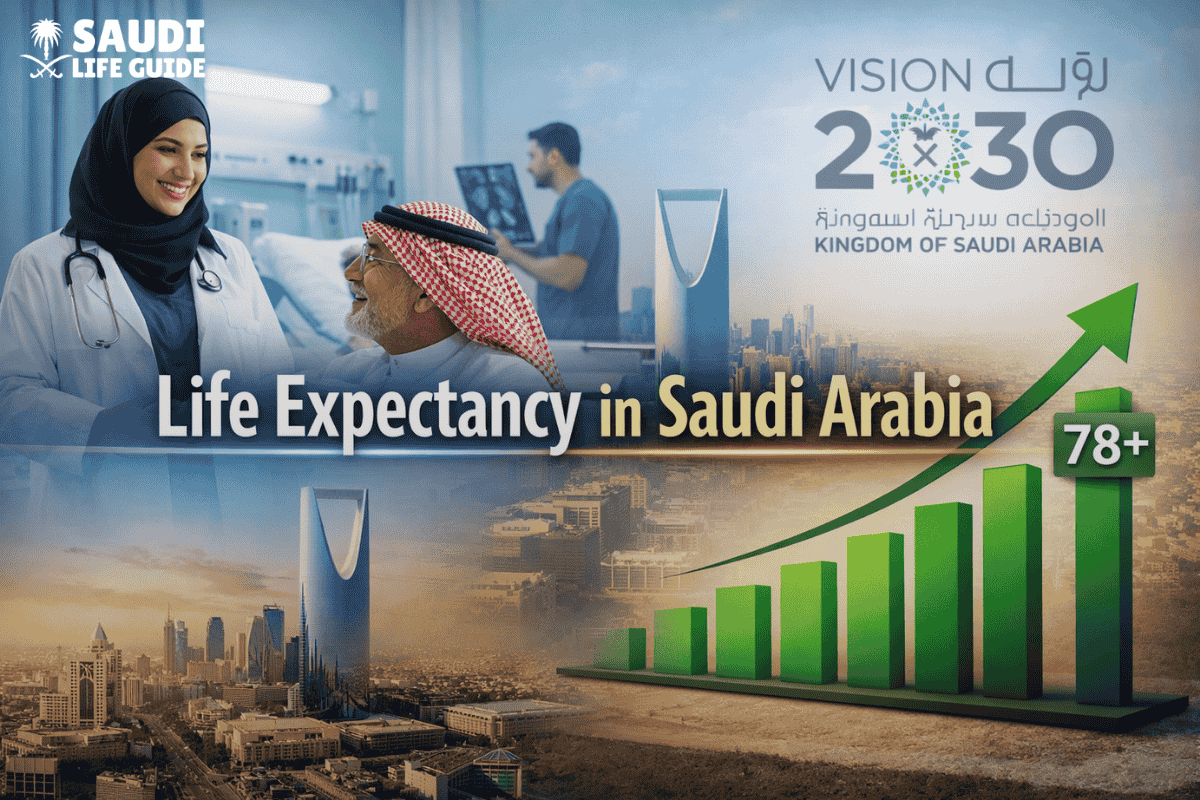
Life expectancy in Saudi Arabia has become one of the most discussed topics as the Kingdom rapidly modernizes its healthcare system and living standards. Many expats in Saudi Arabia wonder how long people live here, whether healthcare is reliable, and how lifestyle affects longevity in the Kingdom.
Based on real expat experience in KSA, Saudi Arabia today offers a healthcare environment very different from what many people imagine. From free public hospitals to world-class private medical facilities, the country has made massive progress in improving life expectancy — especially over the last two decades.
In this guide, we’ll explain current life expectancy figures, why it has improved, how Saudi healthcare works, and what expats should realistically expect when living long-term in Saudi Arabia.
What Is Life Expectancy?
Life expectancy refers to the average number of years a person is expected to live, assuming current mortality rates remain the same. It is widely used to measure:
- Overall healthcare quality
- Living conditions
- Public health awareness
- Lifestyle and disease management
In Saudi Arabia, life expectancy has become a key performance indicator under national health reforms and quality-of-life programs led by Saudi Vision 2030.
Reference:
World Health Organization (WHO) – Life expectancy definition
Current Life Expectancy in Saudi Arabia
As of the mid-2020s, life expectancy in Saudi Arabia is approximately:
- 78–79 years overall
- Among the highest in the Middle East
- Above the global average
This places Saudi Arabia close to many developed nations and far ahead of where it stood just a few decades ago.
Saudi authorities aim to push this number even higher as part of Vision 2030’s Health Sector Transformation Program, which focuses on prevention, early diagnosis, and improved quality of life.

Male vs Female Life Expectancy in Saudi Arabia
Like most countries, women in Saudi Arabia tend to live longer than men.
Average estimates:
- Females: ~81 years
- Males: ~75–76 years
This difference is linked to:
- Lifestyle habits
- Occupational risks
- Chronic disease prevalence
- Preventive healthcare engagement
How Life Expectancy Has Changed Over Time
Saudi Arabia’s improvement is dramatic:
| Year | Life Expectancy |
|---|---|
| 1960s | Below 50 years |
| 1990 | ~67 years |
| 2000 | ~70 years |
| 2010 | ~74 years |
| 2024 | ~78–79 years |
This growth is directly tied to healthcare expansion, vaccination programs, clean water access, and public health education.
Why Life Expectancy Is Increasing in Saudi Arabia
1. Massive Healthcare Investment
Saudi Arabia has invested billions into hospitals, medical cities, and digital health platforms.
2. Free Public Healthcare for Citizens
Citizens receive treatment at government hospitals managed by the Saudi Ministry of Health.
3. Mandatory Health Insurance for Expats
Every legal expat must have medical insurance linked to Absher, ensuring access to private healthcare.
4. Preventive Health Campaigns
Screenings for diabetes, heart disease, and cancer have increased early diagnosis.
5. Improved Emergency & Trauma Care
Saudi emergency services and trauma response are now on par with international standards.
References: Saudi Ministry of Health Awareness Program
Healthcare System in Saudi Arabia (Expat Reality)
In Saudi Arabia, healthcare works differently than many expats expect:
- Public hospitals: Mainly for citizens
- Private hospitals: Used by expats through insurance
- Insurance is mandatory for residency (Iqama)
- Appointments, prescriptions, and lab work are fast and efficient
Many expats in Saudi Arabia report better access to specialists than in their home countries — especially in cities like Riyadh, Jeddah, and Dammam.
Life Expectancy for Expats in Saudi Arabia
From real expat experience in KSA, living in Saudi Arabia can actually improve health outcomes if managed properly.
Positive Factors:
- Low violent crime
- Clean cities
- High-quality private healthcare
- Strong road safety enforcement
- Affordable medications
Challenges:
- Sedentary lifestyle
- High-calorie diets
- Extreme summer heat
- Lack of walking culture in some areas
Expats who adopt healthier routines often report better long-term health than before moving to Saudi Arabia.
Regional Differences in Saudi Arabia
Life expectancy can vary slightly by region:
- Riyadh & Jeddah: Best healthcare access
- Eastern Province: Strong industrial healthcare facilities
- Smaller cities: Improving rapidly but fewer specialists
Government telemedicine services are reducing these gaps.
Common Health Mistakes Expats Make
- Ignoring preventive checkups
- Over-reliance on fast food
- Avoiding outdoor activity entirely
- Delaying treatment due to insurance confusion
- Not understanding insurance coverage limits
Fix: Learn your insurance policy early and register with a nearby hospital.
FAQs – Life Expectancy in Saudi Arabia
1. Is life expectancy in Saudi Arabia high?
Yes. Life expectancy in Saudi Arabia is among the highest in the Middle East and continues to rise steadily.
2. Do expats get good healthcare in Saudi Arabia?
Yes. Expats rely on private hospitals through insurance, which often provide excellent and fast medical services.
3. Is healthcare free for expats?
No. Expats must use insurance, but costs are generally reasonable and medications are affordable.
4. Does Saudi Arabia have good hospitals?
Yes. Major cities host internationally accredited hospitals with advanced medical technology.
5. Will life expectancy reach 80 years in Saudi Arabia?
Saudi Arabia aims to reach 80 years by 2030 under Vision 2030 reforms.
6. Does lifestyle affect life expectancy in Saudi Arabia?
Absolutely. Diet, exercise, and regular checkups play a major role, especially for expats.
Also Read: Ultimate Saudi Life for Expats Guide 2026: Costs, Cities, Rules & Tips
