




🟢 Breaking: Saudi Royal Court says the Supreme Court has set Wednesday as the 1st day of Ramadan.
⚫ Crescent confirmed at Tumair Observatory Ramadan starts tomorrow, Wednesday, February 18.
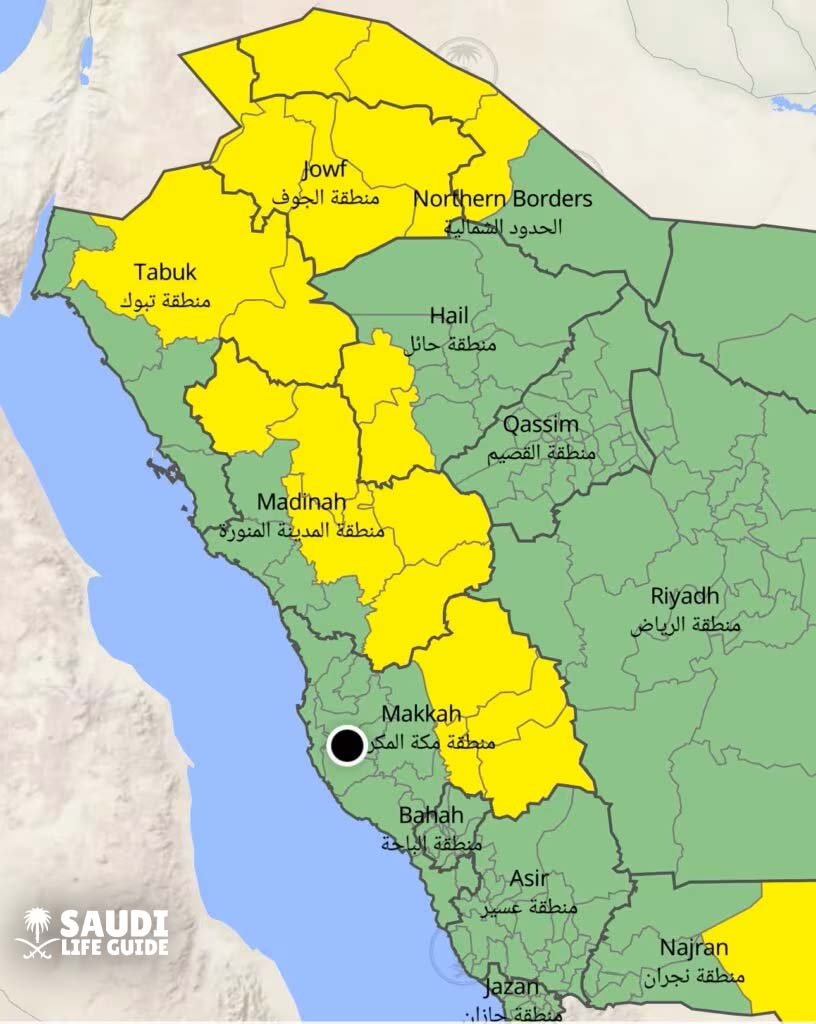
⚫ Live: Weather looks clear at most sighting locations; results are being awaited.
⚫ Around 20 minutes left until the crescent decision is announced.
⚫ Many observatories report clear skies and decent visibility so far (fresh images from Tabuk just came in).
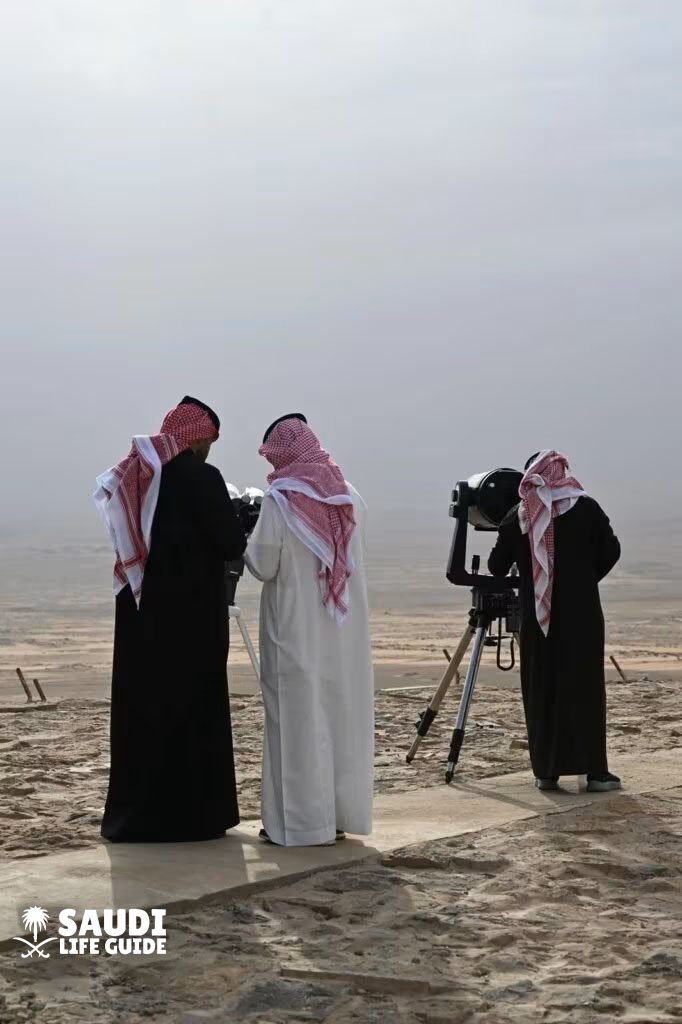
⚫ Just moments left before crescent observation begins at Majmaah University’s Astronomical Observatory.
⚫ Tabuk Observatory: Skies are fully overcast.
⚫ Ha’il: Crescent sighting not possible right now due to dust conditions.
⚫ Up to now, no country has declared Wednesday as the first day of Ramadan.
⚫ Al-Hariq Observatory: Sunset is exactly 5:52 PM, with conditions looking suitable for sighting.
⚫ About 30 minutes remaining before official preparations start, says Abdullah Al-Khudairi at Sudair Observatory.
⚫ Sunset timings across Saudi observatories:
Dammam Observatory — 5:34 PM
Al Uyainah Observatory — 5:50 PM
Tumair Observatory — 5:51 PM
Hawtat Sudair Observatory — 5:52 PM
Al Hariq Observatory — 5:52 PM
Shaqra Observatory — 5:54 PM
Buraidah Observatory — 5:59 PM
Ha’il Observatory — 6:06 PM
Madinah Observatory — 6:18 PM
Makkah Observatory — 6:20 PM
⚫ Only a two-minute gap between sunset and moonset — Sheikh Abdullah Al-Manea says the crescent could still be seen today.
⚫ Astronomer Adel Al-Saadoun says the Ramadan crescent will not be visible today (Tuesday).
⚫ Tumair Observatory: Preparations are now underway for crescent sighting.
⚫ Philippines: Bangsamoro Grand Mufti announces Ramadan begins Thursday, February 19, 2026.
⚫ Countries officially confirming Thursday as the first day of Ramadan so far:
Singapore
Sultanate of Oman
Brunei
Turkey
Australia
⚫ The regions most likely to spot the crescent tonight are those where the moon stays above the horizon longer.
⚫ Majmaah University Observatory Director: New technology is being used for the first time — professional cameras on electronic tracking mounts to follow and capture the crescent live on the western horizon.
⚫ Saudi Supreme Court: Anyone who sees the crescent with the naked eye or binoculars should report to the nearest court to record testimony, or contact the nearest center to reach the closest court.
⚫ Moon-sighting teams across Saudi Arabia are getting ready to begin observations after sunset. The official statement is expected shortly after.
⚫ Today is 29 Sha’ban 1447. If the crescent is confirmed tonight, Ramadan begins tomorrow (Wednesday, Feb 18).
⚫ Thousands of mosques across Saudi Arabia are on standby for the first Taraweeh tonight if the crescent is confirmed.
⚫ Saudi moon-sighting committees will meet this evening to search for the Ramadan crescent.
⚫ Feb 17: If the Ramadan crescent is confirmed tonight, thousands of mosques across Saudi Arabia are set for the first Taraweeh prayers.
⚫ Feb 17 — Saudi Arabia’s moon-sighting committees will gather this evening to search for the Ramadan crescent.
Update (Feb 16, 2026):
Under 24 hours left to confirm Ramadan’s start — it will be either Wednesday or Thursday.
Update (Feb 15, 2026):
Saudi Arabia’s Supreme Court has urged Muslims across the Kingdom to look for the Ramadan crescent on Tuesday evening, February 17, 2026 (29 Sha’ban 1447 per the Umm al-Qura calendar). The official statement called on the public to take part and report any confirmed sightings to decide the first day of Ramadan.
Update (Feb 13, 2026):
Saudi astronomer Khalid Al-Zaaq says Ramadan in Saudi Arabia is expected to begin on Wednesday, 18 February 2026.
Update (based on historical astronomical calculations):
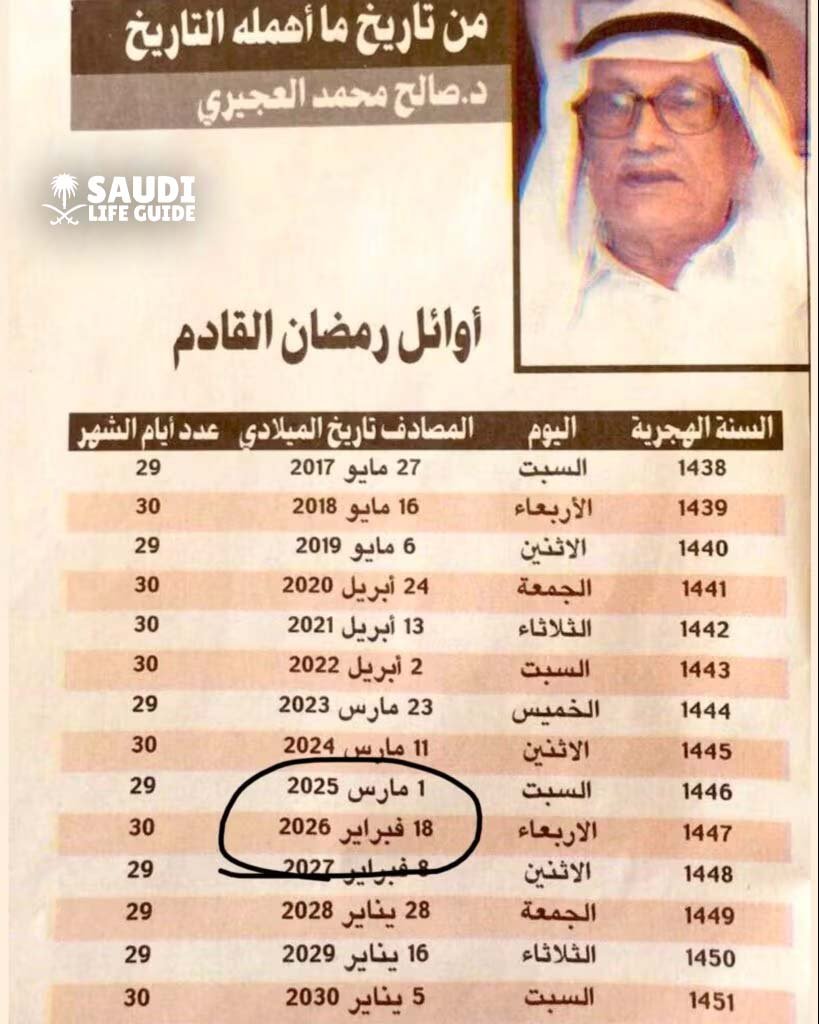
Late Kuwaiti astronomer Dr. Saleh Mohammed Al-Ojeiri’s calculations suggest 1 Ramadan 1447 AH may fall on Wednesday, 18 February 2026, and the month may run for 30 days. As always, the official start depends on verified moon sighting.
Kuwaiti astronomer Dr. Saleh Mohammed Al-Ojeiri’s Ramadan & Eid al-Fitr calculations
Update (Feb 12, 2026):
Turkey and Singapore have announced Thursday, February 19 as the first day of Ramadan, citing astronomical calculations showing the crescent cannot be sighted on the prior observation night.
Update (Feb 11, 2026):
Oman’s official moon-sighting committee confirms Ramadan 2026 will begin Thursday, February 19, stating astronomical data indicates the crescent will not be visible on February 17.
Update (Feb 10, 2026):
Majmaah University’s Astronomical Observatory in Hawtat Sudair reports the Ramadan 1447 AH crescent on Feb 17, 2026 will set around two minutes after sunset. Conjunction is at 3:03 PM Riyadh time, with visibility described as extremely difficult.
Introduction:
Ramadan 1447 AH (2026) is one of the most spiritually significant periods of the year for Muslims in Saudi Arabia and around the world. In the Kingdom of Saudi Arabia (KSA), Ramadan is not only a time for fasting, prayer, and reflection but also a period marked with cultural practices, city‑wide schedules, government planning, and economic activity. This live update guide brings you the latest verified dates, prayer times, moon‑sighting details, and key aspects for Ramadan 2026 in Saudi Arabia, along with practical charts, tables, and official updates that matter to residents and visitors alike.
What Is Ramadan and Why It Matters in KSA
Ramadan is the ninth month of the Islamic calendar, observed by Muslims worldwide as a month of fasting (sawm), prayer (ṣalāt), reflection, and community. Fasting from dawn (suhoor) until sunset (iftar) is obligatory for healthy adult Muslims, and worship intensifies, particularly in the last ten nights when Laylat al‑Qadr (the Night of Power) is expected.
Saudi Arabia, as the custodian of Islam’s two holiest cities Makkah and Madinah observes Ramadan with national coordination. Every year, the Supreme Judicial Council and regional moon‑sighting committees verify the start and end of Ramadan based on traditional lunar observations. Modern astronomy helps predict but does not replace official decisions.
Ramadan 2026 Dates – Expected and Official
Expected Start and End Dates
For Ramadan 2026 (1447 AH), most astronomical calendars and Islamic organizations project:
- Astronomical New Moon (conjunction): February 17, 2026.
- First possible start: Evening of Tuesday, February 17, 2026 (based on moon sighting).
- First day of fasting: Wednesday, February 18, 2026 if the crescent is sighted.
- Some calendars project Thursday, February 19, 2026 as the start depending on sighting criteria.
- Ramadan ends: Around March 18 or March 19, 2026 depending on moon sighting for Shawwal.
- Eid al‑Fitr: Expected Friday, March 20, 2026 (1 Shawwal 1447 AH).
Note: The official confirmation typically comes from the Saudi Supreme Judicial Council after reported moon sightings from multiple regions in the Kingdom.
Moon Sighting: Traditional vs Astronomical Approaches
The beginning of Ramadan is traditionally confirmed through hilāl (crescent) sighting after sunset on the 29th of Shaban (the month preceding Ramadan). The Saudi Supreme Court and local courts coordinate moon‑sighting teams and astronomy data.
Why Moon Sightings Matter:
- Aligns Islamic practices with the lunar calendar.
- Ensures unified fasting start across mosques in Saudi Arabia.
- Strengthens community involvement and religious tradition.
Astronomical Predictions:
- The new crescent phase is predicted astronomically on February 17, making a Feb 18 start plausible.
- Some global Muslim communities may start later (e.g., Feb 19) based on different criteria.
Saudi Arabia’s final announcement remains the authoritative reference for Ramadan dates within the Kingdom.
Ramadan Timings in Major Saudi Cities
During Ramadan, daily routines change across cities, with a stronger focus on Suhoor (pre‑dawn meal) and Iftar (fast break at sunset). Below is a summary of typical Sehri (pre‑dawn) and Iftar timings for major Saudi cities. This gives you an approximate framework; exact times change daily and depend on prayer time schedules published by mosque authorities.
Ramadan 2026 Sehri & Iftar Timings (Example)
| City | Sehri Time (Approx) | Iftar Time (Approx) |
|---|---|---|
| Riyadh | ~05:13 AM | ~05:42 PM |
| Jeddah | ~05:41 AM | ~06:16 PM |
| Makkah | ~05:38 AM | ~06:14 PM |
| Medina | ~05:41 AM | ~06:11 PM |
| Dammam | ~05:01 AM | ~05:27 PM |
| Tabuk | ~05:56 AM | ~06:18 PM |
These estimates are based on city calendars and typical Ramadan schedules for 2026.
For precise times on each day of Ramadan, local mosque calendars and official Ramadan timetable apps should be consulted closer to or during the month.
Ramadan Prayer and Fasting Schedules
Ramadan affects five daily prayers (Fajr, Dhuhr, Asr, Maghrib, Isha) as well as Taraweeh prayers (special night prayers observed during Ramadan). Prayer times slightly shift every day.
Example: Riyadh Prayer Times in Late Ramadan (March 6–10, 2026)
| Date | Fajr | Sunrise | Dhuhr | Asr | Maghrib (Iftar) | Isha |
|---|---|---|---|---|---|---|
| March 6 | 04:55 | 06:11 | 12:04 | 15:26 | 17:57 | 19:09 |
| March 9 | 04:52 | 06:08 | 12:03 | 15:26 | 17:59 | 19:10 |
| March 10 | 04:51 | 06:07 | 12:03 | 15:26 | 17:59 | 19:11 |
Times are approximate and reflect consistent sunrise and sunset patterns through Ramadan.
Taraweeh Prayer: Every night after Isha, mosques hold Taraweeh, often completing recitations of the Qur’an across the month.
Laylat al‑Qadr and Significant Nights
One of Ramadan’s most spiritually important periods is the last ten nights, especially odd nights such as 21st, 23rd, 25th, 27th, and 29th Ramadan, when Laylat al‑Qadr is likely to occur. This is a night when worship is believed to be more rewarding than one thousand months of worship.
Cultural and Economic Aspects in Saudi Arabia
Ramadan Sales Season
Saudi Arabia’s Ministry of Commerce has announced a 54‑day nationwide Ramadan Sales Season beginning February 1 and extending beyond Ramadan into March 2026. This season supports consumer needs, encourages early purchases, and offers discounts on essentials and festive products.
Mosque Regulations
Ahead of Ramadan, the Ministry of Islamic Affairs issued guidelines on mosque operations, including regulated use of loudspeakers for adhan and iqama to maintain prayer sanctity and neighborhood comfort.
Pilgrim and Resident Logistics
With Saudi Arabia’s significant expatriate and pilgrim population, Ramadan also influences:
- Adjusted business hours in public and private sectors.
- Extended evening activities after Iftar.
- Community iftars and charitable distributions.
Health and Fasting Tips for Ramadan 2026
Fasting during long daylight hours (especially in early spring months) can challenge health and energy levels. Key practical suggestions:
- Focus on hydration during suhoor (water, fruits, and complex carbohydrates).
- Balanced iftar meals with proteins, vegetables, and dates for glucose normalization.
- Avoid heavy fried foods to maintain energy and digestion.
- Consult a healthcare professional if you have medical conditions affecting fasting.
Daily Ramadan Checklist for 2026
Before Dawn (Sehri):
- Wake before Fajr.
- Consume balanced food and fluids.
- Make personal supplications.
During the Day:
- Perform Fajr, Dhuhr, Asr prayers on time.
- Engage in Qur’an recitation.
- Make dua’a (supplication).
At Sunset (Iftar):
- Break fast promptly at Maghrib.
- Drink water and eat dates first.
- Perform Maghrib and later Isha prayers.
Night:
- Participate in Taraweeh at mosque or home.
- Focus on reflection and rest.
Ramadan 2026 Quick Facts – Saudi Arabia
Ramadan 1447 AH Overview
- Projected Start: Feb 17/18, 2026 (Depending on moon sighting).
- Projected End: March 18/19, 2026.
- Days of Fasting: 29–30 days depending on crescent moon observation.
- Eid al‑Fitr: Expected March 20, 2026.
Daily Observances:
- Suhoor ends at Fajr (varies daily).
- Iftar at Maghrib.
- Taraweeh occurs nightly after Isha.
Final Notes
Ramadan 2026 in Saudi Arabia is shaping up to be a deeply meaningful month balanced between tradition and modern community life from moon sighting rituals to national economic events, prayer schedules, and Ramadan etiquette. Official announcements from the Saudi Supreme Judicial Council will provide final confirmation of start and end dates, ensuring unified observance across the Kingdom.
For real‑time prayer times and live calendars, trusted Ramadan apps or local mosque timetables should be consulted as Ramadan approaches and during the month itself.

[…] Ramadan 2026 […]