


Summary
“Saudi Muroor has clarified exactly when drivers may move their vehicles after a traffic accident. This guide breaks down the three approved situations, plus what to do if none of them apply to you.”
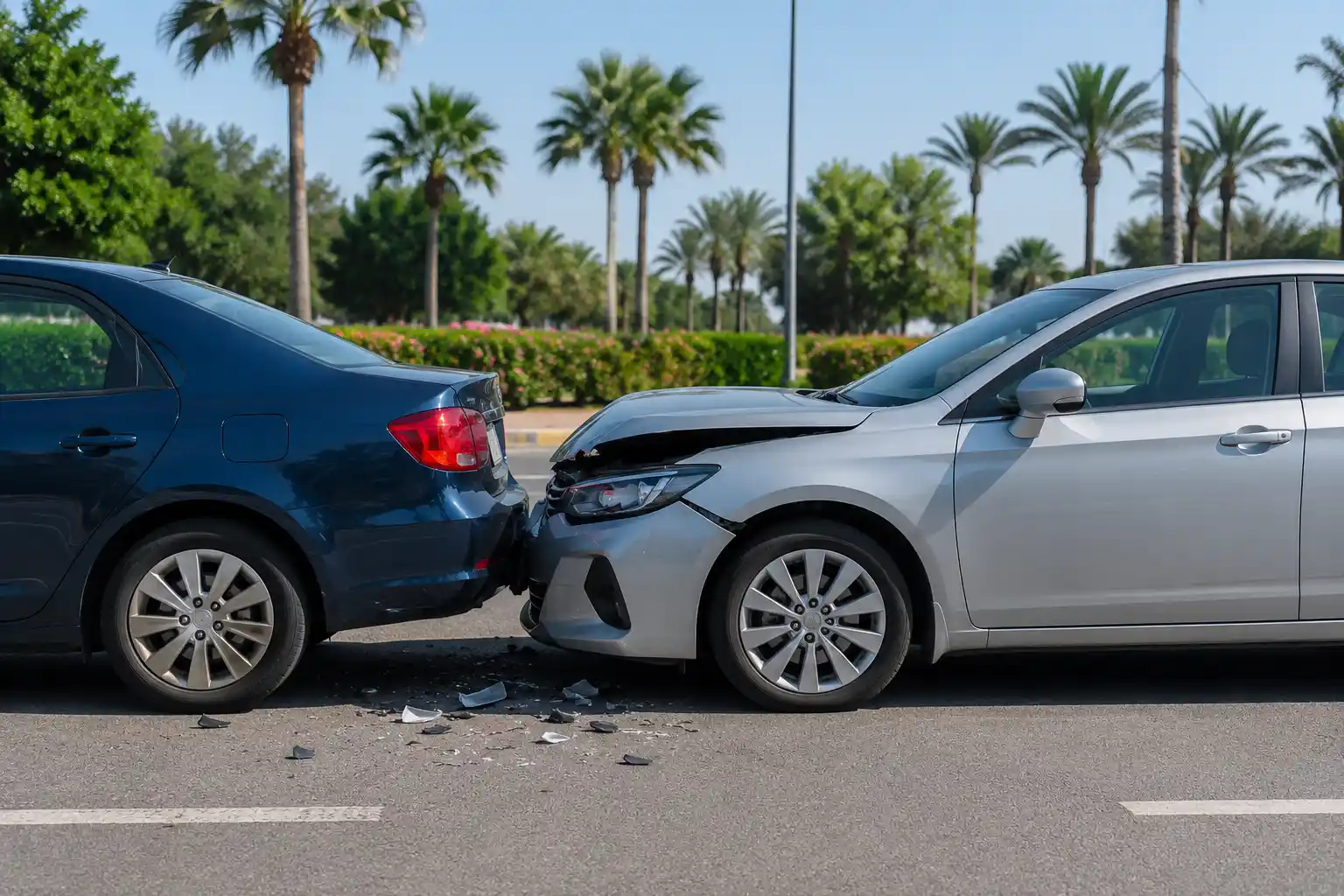
A traffic accident is stressful enough without wondering whether moving your car will get you in trouble. In Saudi Arabia, this question has a clear answer. The General Directorate of Traffic, known as Muroor, has issued official guidance stating exactly when drivers are allowed to move their vehicles from an accident scene before the competent authority arrives.
This clarification matters because moving a vehicle at the wrong time can interfere with fault determination, delay your insurance claim, or in some cases expose you to legal liability. Here’s what Muroor says, and what every driver in Saudi Arabia resident or visitor needs to know.
What Did Muroor Say?
According to Muroor’s official statement, vehicles involved in an accident should generally stay in place until the situation is assessed. However, the authority identified three specific exceptions where moving a vehicle is permitted before officers or the Najm team arrive on scene.
The goal of this guidance is twofold: keep roads safer by reducing secondary collisions and congestion, and make sure accident documentation still happens correctly even when a vehicle is moved.
Follow Saudi Life Guide for Iqama, visa and job updates
New rules, fees and news as soon as we publish them. Join 67,000+ followers on Facebook.
The 3 Situations Where You Can Move Your Vehicle
| # | Situation | Condition to Meet |
|---|---|---|
| 1 | Instructed by the competent authority | A traffic officer or relevant authority tells you to move the vehicle |
| 2 | Minor accident with photo evidence | The accident is minor, and one of the parties has photographed the vehicles at the scene before moving them |
| 3 | Risk to public safety or traffic obstruction | The accident location endangers other road users or is blocking traffic flow |
Situation 1: Official instruction. If a police officer or Muroor representative directs you to move your vehicle, you should do so immediately. This usually happens when officers are already managing the scene and need the road cleared for safety or traffic flow.
Situation 2: Minor accident, photographed first. This is the most common scenario for everyday fender-benders. If the collision is minor no injuries, limited vehicle damage and at least one driver takes clear photos of both vehicles’ positions and damage before moving them, the cars can be moved. The photos become the primary evidence for the accident report and any insurance claim, so this step is not optional if you plan to move your car.
Situation 3: Public safety or traffic obstruction. If leaving the vehicles where they are creates a hazard for example, blocking a lane on a highway or sitting in a blind curve drivers are permitted to move them to prevent further accidents and reduce congestion. Clearing the road quickly in these cases protects everyone, including the drivers involved.
When You Should NOT Move Your Vehicle
Outside of the three situations above, vehicles should remain in position until the authorities arrive. This applies especially to:
- Major accidents involving injury or death. Vehicle positions are critical evidence for determining fault and reconstructing what happened.
- Disputed accidents. If drivers disagree about how the accident occurred, moving vehicles before documentation can weaken your position in a claim or dispute.
- Any case where you have not yet photographed the scene. Without photo evidence, moving the vehicle removes the proof needed for insurance processing.
Leaving the scene of an accident entirely, as opposed to simply moving your vehicle a short distance, is treated far more seriously under Saudi traffic law. Drivers are legally required to stop, remain at or near the scene, and report the incident.
Minor vs. Major Accidents: Key Differences
| Aspect | Minor Accident | Major Accident |
|---|---|---|
| Injuries | None requiring medical care | Injury or fatality involved |
| Vehicle movement | Allowed if photographed first | Should not be moved until authorities assess the scene |
| Reporting channel | Najm (for insured vehicles) | Muroor / police (dial 993) plus ambulance (997) |
| Typical resolution | Insurance claim via Najm report | Police investigation, possible legal proceedings |
| Urgency | Clear road once documented | Wait for officers; do not disturb evidence |
Step-by-Step: What to Do After an Accident
- Check for injuries first. If anyone is hurt, call 997 for an ambulance immediately.
- Turn on hazard lights and place a warning triangle behind your vehicle if you have one.
- Assess the situation against Muroor’s three conditions: were you instructed to move, is it minor with photos taken, or does it obstruct traffic?
- Photograph everything before moving anything vehicle positions, damage, plate numbers, and the surrounding road.
- Exchange information with the other driver: name, ID or Iqama number, phone number, and insurance details. Avoid admitting fault verbally.
- Report the accident through the correct channel Najm for minor accidents involving insured vehicles, or Muroor (993) for major accidents, injuries, or uninsured vehicles.
- Keep all documentation photos, the accident report, and any correspondence until your insurance claim is fully settled.
Reporting Channels and Emergency Numbers
| Service | Number / Channel | When to Use |
|---|---|---|
| Ambulance | 997 | Any injury or medical emergency |
| Muroor (Traffic Police) | 993 | Major accidents, disputes, uninsured vehicles |
| Najm | App, WhatsApp, or 920000560 | Minor accidents between insured vehicles |
| Civil Defense (fire) | 998 | Vehicle fire or related hazard |
Why Documentation Matters More Than Ever
Since the movement of a vehicle under Situation 2 depends entirely on photo evidence, drivers should treat their phone camera as a legal tool, not just a convenience. Recommended documentation includes:
- Wide shots showing both vehicles’ final positions relative to the road
- Close-ups of all damage on every vehicle involved
- Photos of number plates, driving licenses, and vehicle registration (Istimara)
- A short video walkthrough of the scene, narrated if possible
- Contact details of any witnesses present
Insufficient documentation is one of the most common reasons insurance claims face delays in Saudi Arabia. Taking a few extra minutes at the scene, before moving the vehicle, protects your claim later.
Penalties for Non-Compliance
Saudi traffic law treats failure to stop, report, or assist at an accident scene as a serious offense. Drivers who leave the scene without informing the competent authority or assisting injured parties can face a fine of up to SR 10,000, imprisonment of up to three months, or both. Moving a vehicle without meeting any of Muroor’s three conditions may also complicate liability determination, even if it does not itself trigger a direct fine.
Key Takeaway
Muroor’s guidance gives drivers in Saudi Arabia a clear, three-part test before moving a vehicle after an accident: were you instructed to, is it minor and photographed, or is it a safety hazard. Outside these situations, the safest move is no move at all stay put, document everything, and let the competent authority take it from there.
Frequently Asked Questions
Can I move my car after a minor scratch with no dispute?
Yes, as long as you photograph both vehicles’ positions and damage first. This falls under the minor-accident exception.
What if the other driver refuses to let me take photos?
Take photos of your own vehicle, the scene, and the other vehicle’s plate number regardless. You are documenting for your own protection.
Do I need to call Muroor for every accident?
No. Minor accidents between insured vehicles can usually be reported through Najm. Muroor (993) is needed for major accidents, injuries, fatalities, or when a vehicle is uninsured.
Is it illegal to move my car if I’m just blocking traffic?
No this is explicitly one of Muroor’s three approved situations, since clearing an obstruction protects other road users.
What happens if I move my vehicle in a major accident?
This can interfere with the official investigation and fault determination. Only move a vehicle in a major accident if a traffic officer instructs you to.
