



Summary:
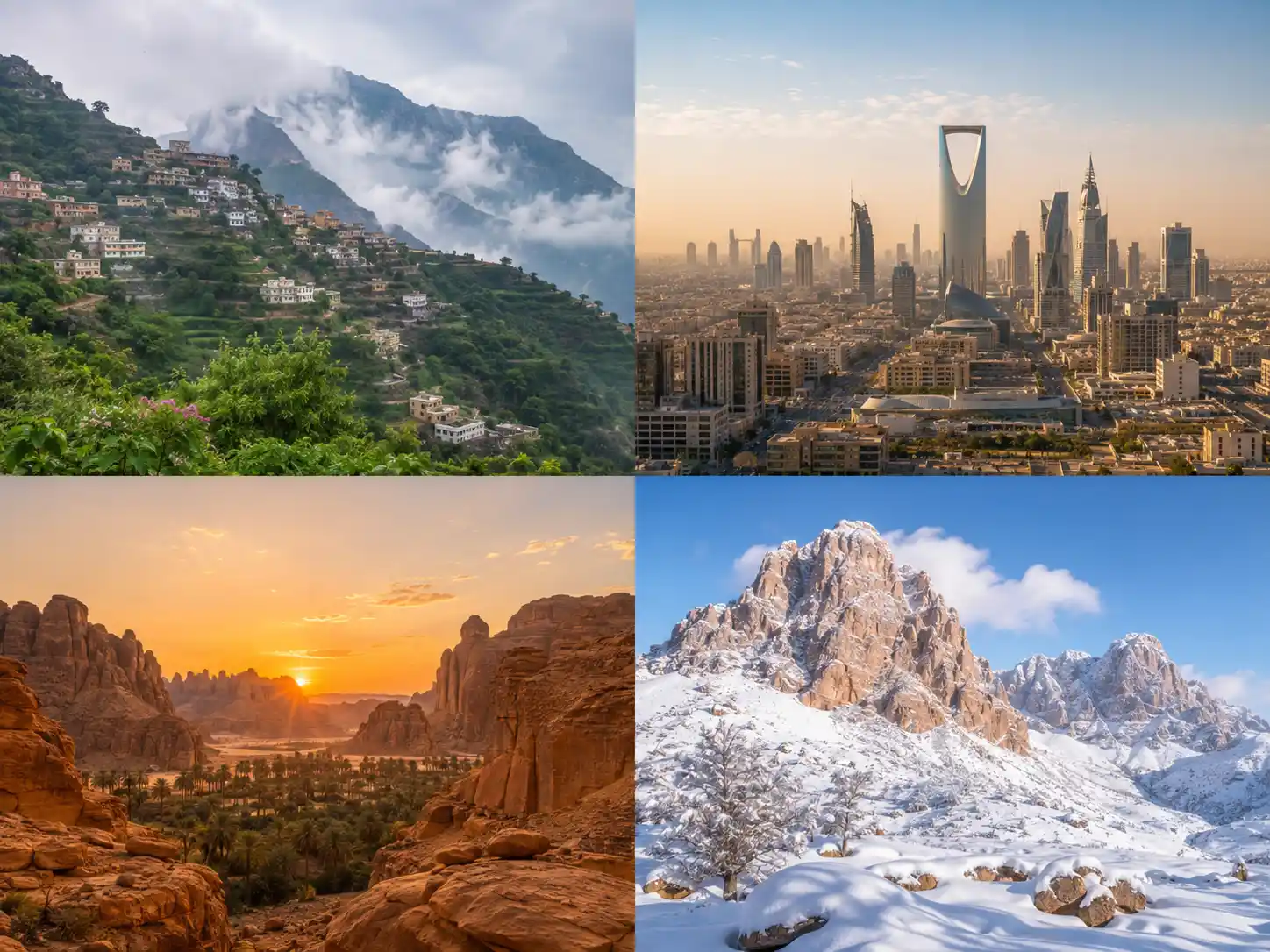
“Saudi Arabia features four main climate periods: crisp winters (Dec–Feb), warm springs (Mar–May), intense summers (Jun–Aug), and pleasant autumns (Sep–Nov). While inland cities like Riyadh reach over 110°F in summer, southern mountain regions such as Abha remain cool near 75°F year-round. This guide covers monthly temperatures, regional weather patterns, and seasonal travel advice across the Kingdom.”
Planning a trip to Saudi Arabia requires understanding its diverse geographic regions. While many Americans envision the Kingdom as an endless hot desert, its vast landscape encompasses distinct regional microclimates. Northern regions experience winter snowfalls, coastal Red Sea cities face summer humidity, and high-altitude southern mountains offer lush green terrain with cool rainfall during midsummer.
Whether traveling on business, embarking on a cultural tour of ancient heritage sites, or moving as an expat, this month-by-month weather calendar provides the temperatures, weather conditions, and travel insights you need to plan your journey.
Regional Climate Snapshot
Before planning month-by-month, it is essential to understand Saudi Arabia’s three primary climate zones:
- Central Desert & Inland Basins (Riyadh, AlUla, Medina): Characterized by an arid desert climate. Summers are extremely hot with negligible humidity, while winters bring clear, sunny days and cool to cold nights.
- Coastal Plains (Jeddah, Dammam, Yanbu): The Red Sea and Arabian Gulf coastlines experience warm winters and hot, highly humid summers moderated by sea breezes.
- Southwestern Highlands (Abha, Asir, Taif, Al Baha): High elevations (above 6,000 feet) produce temperate conditions year-round. This region benefits from seasonal monsoon rainfall during summer, keeping conditions significantly cooler than the rest of the country.
Saudi Arabia Annual Weather & Climate Table
| Month | Avg High (°F / °C) | Avg Low (°F / °C) | Humidity Level | Rain Probability | Key Highlight |
| January | 68°F / 20°C | 48°F / 9°C | Moderate | Low (Occasional North) | Crisp winter days; snow in Tabuk |
| February | 73°F / 23°C | 52°F / 11°C | Low | Low | Ideal desert camping weather |
| March | 82°F / 28°C | 60°F / 16°C | Moderate | Moderate (Brief storms) | Warm days, comfortable nights |
| April | 91°F / 33°C | 68°F / 20°C | Moderate | Moderate | Spring bloom; Taif rose season |
| May | 100°F / 38°C | 77°F / 25°C | High (Coastal) | Low | Warm Red Sea water for diving |
| June | 108°F / 42°C | 82°F / 28°C | Very High (Coastal) | Low (Inland) | Peak summer heat inland |
| July | 111°F / 44°C | 85°F / 29°C | Very High (Coastal) | High (Southwest) | Monsoon rain in Asir highlands |
| August | 110°F / 43°C | 84°F / 29°C | Very High (Coastal) | High (Southwest) | Highland tourism in Abha |
| September | 103°F / 39°C | 77°F / 25°C | High | Low | Gradual late-month cooling |
| October | 93°F / 34°C | 68°F / 20°C | Moderate | Low | Reopening of outdoor events |
| November | 81°F / 27°C | 59°F / 15°C | Comfortable | Low | Peak travel weather nationwide |
| December | 71°F / 22°C | 50°F / 10°C | Comfortable | Low | Cool winter; major festivals |
Month-by-Month Saudi Arabia Weather Breakdown
January: Crisp Winter & Northern Snowfall
January is the coldest month in Saudi Arabia. Daytime temperatures across central cities like Riyadh and historic hubs like AlUla average a comfortable 68°F (20°C). Nighttime temperatures in desert regions drop rapidly, routinely reaching 48°F (9°C) or lower.
In the northern mountainous regions of Tabuk and Jabal al-Lawz, winter weather systems occasionally bring localized snowfall, drawing travelers eager to see snow-covered desert terrain.
- Average Temperatures: High 68°F (20°C) | Low 48°F (9°C)
- Conditions: Sunny, crisp, dry air with cold desert nights.
- Best Regions to Visit: Riyadh, Diriyah, Tabuk, AlUla, and Medina.
- Packing Essentials: Medium jackets, thermal layers for late evenings, boots, and lip balm.
February: Mild Days & Desert Camping
February brings mild winter weather across the central plateau and coastal areas. High temperatures hover around 73°F (23°C), creating pleasant conditions for walking tours, archaeological site visits, and outdoor dining.
Brief winter showers earlier in the season often trigger wildflower blooms across northern and central plains. This makes February a prime month for Kashta—traditional Arabian desert camping.
- Average Temperatures: High 73°F (23°C) | Low 52°F (11°C)
- Conditions: Warm sunlight, clear skies, and low humidity.
- Best Regions to Visit: Riyadh, Hegra (AlUla), Eastern Province (Dammam/Khobar).
- Packing Essentials: Light layers, fleece jackets for night, sun protection, and comfortable walking shoes.
March: Spring Transition & Mild Breezes
March marks the onset of spring. Temperatures rise to an average high of 82°F (28°C) in central areas, though evenings stay refreshing at around 60°F (16°C).
During March, shifting wind patterns can create brief dust storms (Shamal) or quick thunderstorm showers, particularly in central and northern basins.
- Average Temperatures: High 82°F (28°C) | Low 60°F (16°C)
- Conditions: Warm afternoons, comfortable evenings, occasional wind.
- Best Regions to Visit: Edge of the World (Riyadh), Jeddah Al-Balad, and AlUla.
- Packing Essentials: Breathable cotton clothing, light outerwear, sunglasses, and a light scarf for dusty winds.
April: Rising Heat & Mountain Blossom
April brings warmer conditions as daytime temperatures cross 90°F (33°C) inland. While afternoon heat increases, mornings and evenings remain manageable for sightseeing.
In the mountain city of Taif, April is the harvest season for the famed Taif damask roses. High elevations keep Taif cool while the surrounding valleys fill with fragrant blooms.
- Average Temperatures: High 91°F (33°C) | Low 68°F (20°C)
- Conditions: Hot afternoons, mild evenings, rising coastal humidity.
- Best Regions to Visit: Taif, Abha, Jeddah, and Red Sea coastal resorts.
- Packing Essentials: Lightweight attire, sun hats, high-SPF sunscreen, and breathable footwear.
May: Early Summer & Red Sea Diving
May brings initial summer heat across low-altitude areas, with inland cities reaching 100°F (38°C). Outdoor activities in Riyadh and eastern inland cities shift to early mornings or late evenings.
Conversely, May offers great conditions for coastal travel along the Red Sea coast near Jeddah and Yanbu. Water temperatures rise to around 80°F (27°C), making it an ideal period for scuba diving, snorkeling, and boat excursions.
- Average Temperatures: High 100°F (38°C) | Low 77°F (25°C)
- Conditions: Hot days, warm nights, higher humidity along coasts.
- Best Regions to Visit: Jeddah, Yanbu, Umluj, and Asir Highlands.
- Packing Essentials: UV-protective clothing, swimwear, sandals, and hydration bottles.
June: Peak Inland Heat & Highland Escapes
June marks the start of intense summer conditions across the interior. Afternoon high temperatures in Riyadh, Dammam, and Makkah routinely exceed 108°F (42°C).
To avoid extreme heat, travelers move toward the southwestern Asir Mountains. Elevated cities like Abha and Al Baha remain around 75°F to 82°F (24°C–28°C), providing a cool mountain escape.
- Average Temperatures: High 108°F (42°C) | Low 82°F (28°C)
- Conditions: Extremely hot and dry inland; humid along coasts; temperate in mountains.
- Best Regions to Visit: Abha, Al Baha, Soudah Peaks, and Taif.
- Packing Essentials: Ultra-light clothing, heavy-duty sunblock, sunglasses, and light jackets for high mountains.
July: Midsummer Monsoons in the Southwest
July is generally the hottest month of the year in central and eastern Saudi Arabia, with peak temperatures frequently topping 110°F (44°C). Coastal cities experience peak relative humidity, making outdoor physical exertion uncomfortable during daytime hours.
However, southwestern Saudi Arabia receives seasonal Indian Ocean monsoon winds (Khareef). Rain, heavy fog, and misty cloud cover blanket the peaks of Asir, dropping temperatures in Soudah and Abha to a pleasant 70°F–75°F (21°C–24°C).
- Average Temperatures: High 111°F (44°C) | Low 85°F (29°C)
- Conditions: Intense inland heat; monsoon rain showers in southern highlands.
- Best Regions to Visit: Abha, Asir National Park, Al Baha, and Tanomah.
- Packing Essentials: Moisture-wicking apparel for cities; light rain jacket and umbrella for southern mountains.
August: Indoor Season & Cool Summits
August continues the pattern of strong midsummer heat inland. Lifestyle across major metro areas like Riyadh and Dhahran adapts to night-focused activity, with air-conditioned venues open late into the evening.
Mountain tourism in Asir remains active throughout August, as regional visitors gather to enjoy green mountain passes, cable cars, and forest parks.
- Average Temperatures: High 110°F (43°C) | Low 84°F (29°C)
- Conditions: Hot, dry interior; high coastal humidity; cool mountain breezes.
- Best Regions to Visit: Abha, Taif, indoor cultural venues (Ithra in Dhahran, National Museum in Riyadh).
- Packing Essentials: Light linen clothing, sunglasses, water flasks, indoor light layers for air conditioning.
September: The Autumnal Transition
September brings gradual relief from peak summer temperatures. While early September afternoons remain hot at around 103°F (39°C), evening temperatures drop late in the month.
Humidity along the Red Sea and Arabian Gulf coastal areas slowly subsides toward late September, allowing a return to evening outdoor dining along waterfront promenades (Corniches).
- Average Temperatures: High 103°F (39°C) | Low 77°F (25°C)
- Conditions: Hot days easing into comfortable evenings by late month.
- Best Regions to Visit: Jeddah Corniche, Dammam, Taif, and Al Baha.
- Packing Essentials: Breathable clothing, comfortable casual wear, and sun gear.
October: Reopening of the Outdoor Season
October brings pleasant weather back to most of Saudi Arabia. High temperatures drop to an average of 93°F (34°C), while nights cool to 68°F (20°C).
This month marks the official start of the outdoor tourist and entertainment season across the country. Heritage sites, outdoor markets, desert excursions, and open-air concerts resume regular operation.
- Average Temperatures: High 93°F (34°C) | Low 68°F (20°C)
- Conditions: Warm, dry, and increasingly comfortable.
- Best Regions to Visit: AlUla, Diriyah, Riyadh, and Madain Saleh.
- Packing Essentials: Light daywear, light jackets or wraps for evening, and hiking boots.
November: Prime Travel Window
November offers some of the best weather conditions of the year nationwide. Sunny days average 81°F (27°C) with low humidity, while evenings are crisp at 59°F (15°C).
It is an ideal time for touring ancient heritage, desert hiking, driving trips, and attending seasonal entertainment festivals like Riyadh Season.
- Average Temperatures: High 81°F (27°C) | Low 59°F (15°C)
- Conditions: Mild, sunny, clear, and comfortable day and night.
- Best Regions to Visit: Entire Kingdom (Riyadh, AlUla, Jeddah, Medina, Eastern Province).
- Packing Essentials: Layered casual wear, light jackets, hiking equipment, and sun protection.
December: Winter Festivals & Desert Safaris
December brings full winter conditions. Temperatures in Riyadh average 71°F (22°C) during the day, while night temperatures in open desert areas can dip toward 40°F (4°C).
December features lively outdoor events, cultural festivals, and desert excursions. Walking through historical districts like Jeddah’s Al-Balad or sitting by a campsite fire in the desert dunes are popular activities.
- Average Temperatures: High 71°F (22°C) | Low 50°F (10°C)
- Conditions: Cool, clear days and chilly desert nights.
- Best Regions to Visit: Riyadh, AlUla, Jeddah, Tabuk, and Rub’ al Khali (Empty Quarter).
- Packing Essentials: Warm coats, sweaters, scarves, warm socks, and layered clothing.
Seasonal Comparison Matrix
To help choose the right travel window, this matrix breaks down seasonal expectations:
| Season | Months | Weather Characteristics | Regional Variations | Recommended Travel Goals |
| Winter | Dec – Feb | Cool to cold; clear skies; low humidity; night drops. | Snow in Tabuk mountains; mild days inland and on coasts. | Heritage tours, city sightseeing, desert camping, outdoor festivals. |
| Spring | Mar – May | Warming rapidly; rising humidity; occasional spring showers. | Taif rose harvest blooms; pleasant coastal water temps. | Red Sea diving, mountain visits, early spring hiking. |
| Summer | Jun – Aug | Extreme heat inland (110°F+); high coastal humidity. | Southwestern highlands remain cool (70°F–80°F) with rain. | Highland retreats (Abha/Asir), indoor museums, late-night dining. |
| Autumn | Sep – Nov | Rapid cooling; comfortable breezes; clear skies. | Easing humidity along coasts; dry inland. | Stargazing, archaeological travel, road trips, outdoor events. |
Best Time to Visit Saudi Arabia by Interest
               RECOMMENDED TRAVEL WINDOWS BY ACTIVITY
┌─────────────────────────┬──────────────────────────────────────────┐
│ Activity                │ Recommended Months                       │
├─────────────────────────┼──────────────────────────────────────────┤
│ General Sightseeing     │  Nov  Dec  Jan  Feb  Mar                 │
│ Desert Camping (Kashta) │  Nov  Dec  Jan  Feb                      │
│ Red Sea Scuba Diving    │       Apr  May       Oct  Nov            │
│ Mountain Escape (Abha)  │            Jun  Jul  Aug                 │
│ Taif Rose Festival      │       Apr                                │
└─────────────────────────┴──────────────────────────────────────────┘
- For Optimal Weather Nationwide: Plan your trip between November and March. Temperatures are mild, outdoor festivals are active, and walking around historical areas is comfortable.
- For Summer Mountain Escapes: Visit Abha, Al Baha, or Taif between June and August. High elevation keeps temperatures pleasant while monsoon rains turn mountain valleys green.
- For Red Sea Coastal Activities: Travel in April, May, October, or November. Water temperatures are warm, and atmospheric humidity stays lower than midsummer levels.
- For Budget Travel: Look at shoulder months like May and September, when hotel rates decrease prior to or immediately following the summer peak.
Practical Packing Tips for American Travelers
- Layering is Essential: Desert climates produce high diurnal temperature variation. A day starting at 80°F can quickly drop to 50°F after sunset. Bring clothing options you can layer easily.
- Sun Protection: The UV index remains high year-round. Pack broad-spectrum SPF 50+ sunscreen, UV-blocking sunglasses, and protective hats.
- Respectful, Weather-Appropriate Attire: Lightweight, loose-fitting cotton or linen pants and long-sleeved shirts keep you cool while aligning with local dress customs.
- Hydration Supplies: Low atmospheric humidity in inland zones like Riyadh speeds up dehydration. Carry an insulated reusable water bottle.
- Air Conditioning Preparedness: Indoor venues, malls, and vehicles run heavy air conditioning during summer months. A light fleece jacket or cardigan is useful when moving indoors.
Summary Checklist
- Winter (Nov–Feb): Ideal travel window across Riyadh, AlUla, and Jeddah. Pack layers and warm evening wear.
- Spring (Mar–May): Warm inland, ideal for Red Sea diving and visiting Taif. Pack sun protection and breathable attire.
- Summer (Jun–Aug): Very hot inland; target high-elevation destinations like Abha. Pack rain gear for southern mountains.
- Autumn (Sep–Oct): Easing heat and reopening of outdoor events. Pack casual fall attire with light evening layers.
