

Last updated: 8 November 2026
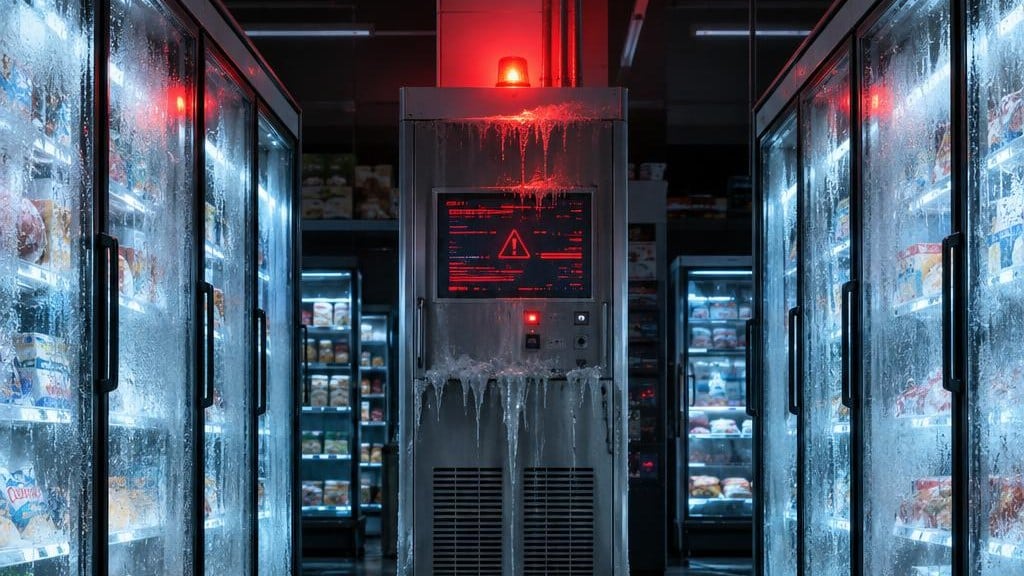
A supermarket cyber attack has hit stores in seven European countries. On Monday 2 November 2026, hackers remotely took control of refrigeration systems in dozens of supermarkets, raised freezer temperatures and switched on defrost cycles. Chilled and frozen food became unsafe, and retailers had to throw large amounts of it away.
The European Union’s Agriculture and Food Commissioner, Christophe Hansen, called it “a deliberate attempt to disrupt Europe’s food supplies” and said “the food waste and impact on businesses are real.”
What happened in the supermarket cyber attack
- Target: the computer-controlled refrigeration systems that run freezers and fridges in supermarkets, not the tills or websites.
- Method: attackers raised temperatures and triggered defrost cycles remotely. One ICA store in Sjöbo, Sweden, reported temperatures of up to 50°C.
- Result: fresh and frozen food could no longer be sold safely, so stores discarded it.
- Who did it: not known yet. Reports describe “unidentified actors”, and Belgium’s prosecutor has opened a criminal investigation.
- Earlier warning: a similar attack hit supermarkets in France about three weeks earlier.
Follow Saudi Life Guide for Iqama, visa and job updates
New rules, fees and news as soon as we publish them. Join 107,000+ followers on Facebook.
Which countries and supermarkets were hit
Reports say seven countries were affected. The ones named so far are:
- Sweden: six of about 800 Coop stores, plus “a limited number” of ICA stores.
- Ireland: 13 supermarkets, according to Irish broadcaster RTÉ.
- Belgium and Luxembourg: “several” stores of the Ahold Delhaize group.
- Estonia: named among the affected countries.
- Other chains targeted: Carrefour, Intermarché and Spar, without store numbers.
Some reports also list Finland and the Netherlands, but the full list of seven countries has not been officially confirmed by retailers or national cyber agencies yet.
UK told households to keep 3 days of food and water
The attack comes shortly after the UK government launched an emergency readiness campaign. On 23 October 2026, Security Minister Dan Jarvis told Parliament that every household should be able to cope on its own for three days if everyday services are disrupted, for example by severe weather, cyber attacks or hostile activity. The UK checklist includes:
- Three days of bottled water and non-perishable food that needs no fridge or cooking.
- A torch, batteries and a battery or wind-up radio.
- Some cash, a first aid kit and hand sanitiser.
- Copies of important documents, blankets and warm clothing.
The UK advice was general emergency planning published before this attack. It was not issued because of it.
Is Saudi Arabia affected?
No impact on Saudi Arabia or the other Gulf countries has been reported. Supermarkets in the Kingdom are operating normally, and there is no official advice from Saudi authorities to stock up on food. Please do not panic buy, and share only news from official sources.
Many expats in Saudi Arabia have family in Europe and the UK. If your relatives live in one of the affected countries, they should follow their local news and retailer notices, and avoid buying chilled or frozen food that looks thawed or has been refrozen.
What expats in Saudi Arabia can do
- Keep a small home kit: a few days of bottled water, tinned or dry food, a torch, a power bank and some cash is sensible anywhere, especially for families with children.
- Follow official channels: in Saudi Arabia, emergency alerts come from Saudi Civil Defense and the National Early Warning Platform on your phone.
- Watch for scams: big news is often followed by fake messages, “free food voucher” links and fake charity appeals. Do not click unknown links. Read how the WhatsApp hack scam with images and files works.
- Protect your own devices: update your phone and router, use strong passwords and turn on two-step verification for Absher, Nafath, banking and WhatsApp.
Why this attack matters
Most cyber attacks steal data or lock computers for ransom. This one went after physical equipment that keeps food safe. Sweden’s National Cybersecurity Center urged operators to update or patch any refrigeration and building-control devices that are exposed to the internet. Experts expect more countries to review the security of their food supply chains after this incident.
We will update this page as retailers, national cyber agencies and the EU publish more details.
Latest status of the investigation
Belgium’s prosecutor has opened a criminal investigation, and no group has claimed responsibility. EU Commissioner Christophe Hansen also said that “food security is not currently at risk” in Europe. A University of Bristol security expert quoted by Al Jazeera pointed to easily guessed passwords and known flaws in refrigeration controllers, many of them past the end of their supported life.
How residents in Saudi Arabia can protect their accounts
The same weakness, a reused or simple password, is behind most account takeovers that expats in Saudi Arabia deal with. Saudi Arabia’s National Cybersecurity Authority (NCA) launched the sixth edition of its national cybersecurity awareness campaign on 1 October 2026, and its account protection advice is short:
- Turn on two-factor authentication for email, WhatsApp, banking apps and social media.
- Choose a strong password and do not reuse it across accounts.
- Adjust your account settings and review active sessions, signing out any device you do not recognise.
- Never share a verification code. Codes for Absher, your bank or the Nafath app are for you alone, whoever asks for them.
Before opening a link you were sent, you can check it with the NCA’s free Tahqaq service on the Haseen portal or through WhatsApp. It works in English and Arabic, is available 24 hours a day, and needs a Saudi mobile number for the WhatsApp route.
How to report a scam in Saudi Arabia
- Fraudulent text messages: forward the SMS to 330330. The Communications, Space and Technology Commission says the service is free for mobile subscribers.
- Money taken or fraud attempted: the CST says fraud crimes are for the police, not the regulator. Report through the Kollona Amn app or call 911 (999 where 911 is not available).
- Bank details shared: call your bank at once on the number printed on your card or in its official app, so it can block the card or account. SAMA has warned that it does not ask customers for personal or banking data by phone or message.
Frequently asked questions
Are supermarkets in Saudi Arabia affected by the European fridge attack?
No impact on Saudi Arabia has been reported, and Saudi authorities have issued no advice to stock up on food.
How do I check if a link is safe in Saudi Arabia?
Use the NCA’s Tahqaq service on the Haseen portal or through WhatsApp before you open it. If in doubt, do not click.
Where do I report a scam text message?
Forward it to 330330. If you have lost money, also report it to the police through Kollona Amn and call your bank straight away.
Sources: statement by EU Commissioner Christophe Hansen and retailer statements as reported by DW and AFP via Yahoo News (3 November 2026), TRT World, RTÉ (Ireland), and the UK Government readiness guidance as reported by The National (23 October 2026).