


Last updated: 19 October 2026
How to get a job in Saudi Arabia: apply to Saudi employers on LinkedIn, Bayt, GulfTalent, Naukrigulf and Indeed or on company career pages, or go through a licensed recruitment agent in your home country. After you accept an offer, the employer issues your work visa on Qiwa. If you already live in the Kingdom, you can usually move to a new employer through Qiwa once your contract ends.
Many expats in Saudi Arabia find their job the hard way: months of applications to the wrong places, fees paid to agents who disappear, or a visit to the Kingdom on the hope that a visit visa can be turned into a work visa. This guide shows how to get a job in Saudi Arabia in 2026 the way it actually works, whether you are applying from Pakistan, India, Bangladesh or anywhere else, or you are already here on an iqama and want to change jobs.
Useful tools: make a Gulf-style CV with our free CV maker, test an offer against your costs with the cost of living calculator, and see what you will be owed when you leave with the end of service calculator.
How to Get a Job in Saudi Arabia From Abroad or Inside the Kingdom
| Your situation | Best routes | What to watch |
|---|---|---|
| Applying from abroad | Job sites, company career pages, licensed agents in your country | Fake visas and agents asking for money up front |
| Already in Saudi Arabia on an iqama | Job sites, referrals, then a Qiwa transfer | Do not start work before the transfer is complete |
| In Saudi Arabia on a visit visa | Interviews only | A visit visa cannot become a work visa |
| Saudi national | Jadarat, HRDF programmes, job sites | Not covered in this guide |
Follow Saudi Life Guide for Iqama, visa and job updates
New rules, fees and news as soon as we publish them. Join 101,000+ followers on Facebook.
How to Get a Job in Saudi Arabia: 10 Ways That Work
1. Use the Big Job Sites, With Daily Alerts
For most expats, learning how to get a job in Saudi Arabia starts with the big job sites, where most private-sector vacancies are posted. Create a full profile on two or three of them, upload your CV, and turn on daily email alerts for your job title and city, so you apply in the first days a role is open.
| Job site | Good for | Tip |
|---|---|---|
| Office, engineering, IT, management | Recruiters search profiles here, so a complete profile matters as much as applying | |
| Bayt | Saudi and Gulf companies of every size | Fill in the Saudi-specific fields such as iqama status and transferable iqama |
| GulfTalent | Mid and senior professional roles | Set Saudi Arabia as your preferred location |
| Naukrigulf | Candidates from India and Pakistan | Many listings come from agencies, so confirm they are licensed |
| Indeed Saudi Arabia | Smaller local employers, retail, hospitality | Read the post for nationality requirements before you apply |
| foundit Gulf | Wide mix, formerly Monster Gulf | Good second site next to LinkedIn or Bayt |
A real employer never asks you to pay for a job. Saudi law puts recruitment and visa costs on the employer, so a “processing fee” in a job advert is a warning sign.
2. Make LinkedIn Work for You
In Saudi Arabia, many HR teams shortlist from LinkedIn before they post anywhere else. Write your headline as the job you want plus your location, for example “Site Engineer, Riyadh” or “Accountant open to roles in Saudi Arabia”, list Saudi or Gulf experience at the top, and switch on Open to Work for recruiters only if you do not want your current employer to see it. Connect with recruiters at the companies you want, then message them with one short paragraph and your CV.
3. Apply Directly on Company Career Pages
Large employers such as banks, hospitals, telecom companies, contractors and food groups post many roles only on their own careers pages. Make a list of 20 companies in your field, check their careers pages every week, and apply there instead of through third parties who copy the adverts. Our guide to Almarai jobs shows how one large employer hires and how fake agents misuse its name.
4. Go Through a Licensed Agent in Your Home Country
For skilled and semi-skilled jobs, many Saudi employers recruit through agents in Pakistan, India, Bangladesh and other countries. Use only licensed ones:
- Pakistan: the agent must be a licensed Overseas Employment Promoter. Check it on the Bureau of Emigration and Overseas Employment list of licensed OEPs. Before you fly, you register and attend the briefing at the Protector of Emigrants office.
- India: Saudi Arabia is an ECR country, so holders of ECR passports need emigration clearance for a job there. Use only recruiting agents registered with the Protector General of Emigrants, listed on eMigrate.
- Bangladesh: register with BMET and use a licensed recruiting agency. You need the BMET emigration clearance card to leave for work.
5. Get Professionally Accredited Before You Apply
Saudi Arabia now checks the skills of many workers before they arrive. The HRSD Professional Accreditation Program has two tracks: Professional Verification, which checks the certificates and experience of workers in high-skill jobs, and Professional Examination, a practical and written test for medium and lower-skill trades such as electricians and plumbers. It runs in Pakistan, India, Bangladesh, Sri Lanka and Egypt and covers more than 1,000 professions. Passing it before you apply makes you easier to hire.
6. Get Your Professional Licence Ready
Some jobs need a Saudi licence on top of the visa. Engineers must register with the Saudi Council of Engineers, and doctors, nurses, pharmacists and other health workers need a licence from the Saudi Commission for Health Specialties. Employers in these fields prefer candidates who have started the process, so gather your attested degree, transcripts and experience letters early.
7. Ask for Referrals
Referrals still fill many jobs in Saudi Arabia. Tell friends and former colleagues in the Kingdom exactly which role you want, send them your CV as a PDF, and ask whether their company pays a referral bonus. A CV passed to HR by a staff member is read; a cold email often is not.
8. Use WhatsApp, Facebook and Telegram Groups Carefully
Job groups do carry real vacancies, but they are also where most fake job offers and fake visas are sold. Treat every post as unconfirmed until you can find the company yourself, never send your passport copy or money to a number from a group, and never pay for a visa. If someone sends you a visa, check if the Saudi visa is real on the official MOFA and KSA Visa sites before you resign or book a ticket.
9. Already in Saudi Arabia? Change Jobs Through Qiwa
If you hold an iqama, you do not need to leave the country to change jobs. Under the Labour Reform Initiative that started on 14 March 2021, a private-sector expat worker can move to a new employer once the current contract ends, without the employer’s consent. Moving during the contract is possible only under set conditions and with notice. The new employer sends the request on Qiwa, and you accept it in the Employee Transfer service.
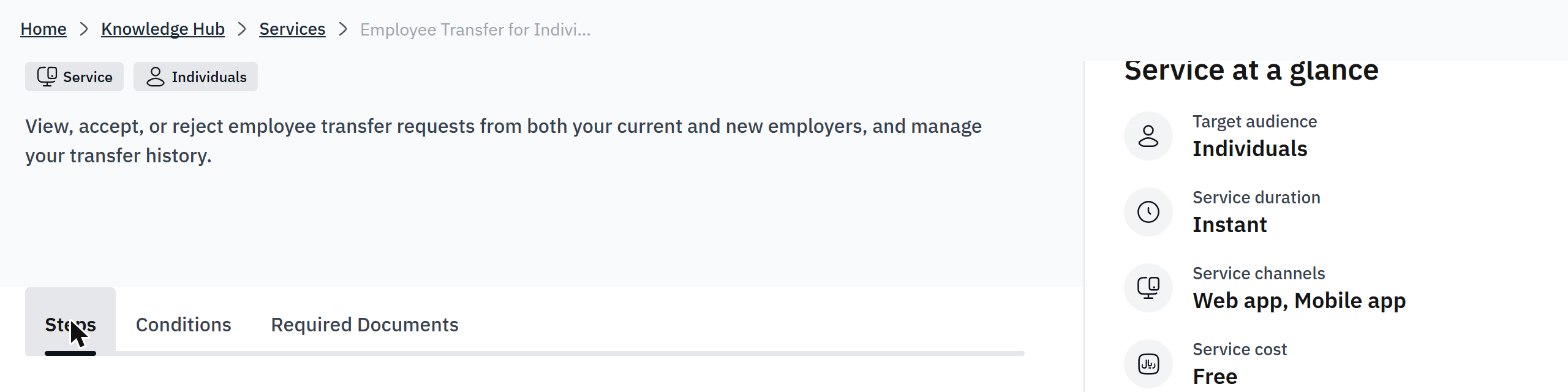
Before you resign, read our guides to the Saudi resignation rules and Article 81 of the Saudi Labour Law, check that the new company is not in the red band with an iqama colour and Nitaqat check, and track the request with our iqama transfer status guide. Do not start at the new company until the transfer shows as completed.
10. Walk In With Your CV, Where It Still Works
If you are already in Saudi Arabia, walking in with a printed CV still works in restaurants, cafes, hotels, workshops and on construction sites, where managers often hire on the spot. Dress smartly, go mid-morning when it is quiet, and ask for the manager or HR by name. It works far less in offices, where everything goes through online applications.
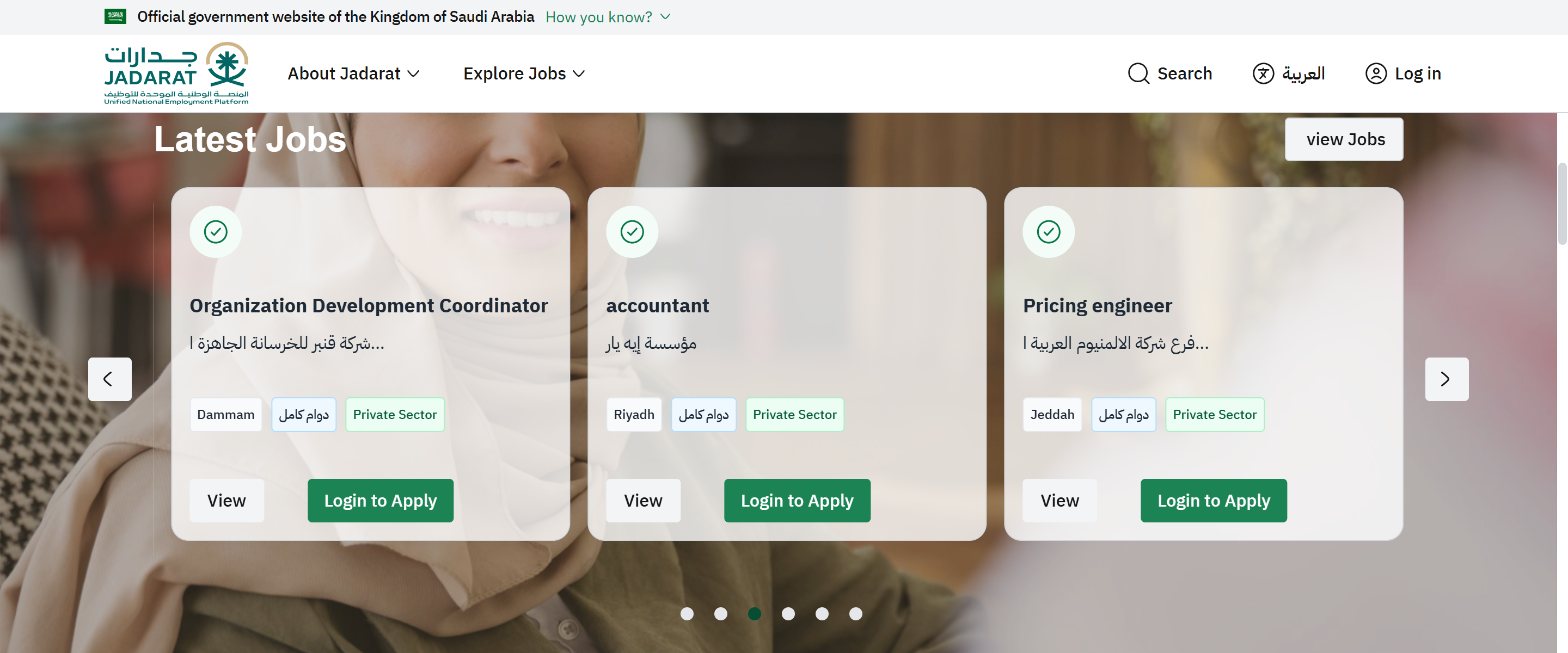
Jadarat Is for Saudi Nationals
Jadarat is the Unified National Employment Platform, run by the Human Resources Development Fund (HRDF), and it lists thousands of public and private sector jobs. It is not for expats: HRDF lists being a Saudi national as a condition for applicants. If a video or agent says Jadarat is how to get a job in Saudi Arabia as an expat, use the private job sites above instead.
Jobs That Are Closed or Limited for Expats
Saudization (Nitaqat) reserves some jobs for Saudis and sets a Saudi share in others, so apply where expats can actually be hired. Many human resources and administrative support roles, such as secretary, translator and data entry, are now reserved for Saudis after the list grew in April 2026. Other fields have a Saudi percentage rather than a full ban, for example accounting, which rises to 50% from 27 October 2026, project management at 70% and procurement at 70%. Engineering, health, technical trades, IT and specialist roles remain the strongest fields for expats.
After You Get an Offer: The Visa Steps
- Offer and contract: read the salary, allowances, working hours and contract length. Compare the pay with our Saudi salary guide.
- Work visa: the employer issues the work visa through Qiwa and sends you the visa number. Domestic worker visas go through Musaned instead.
- Medical: pass the Wafid medical at an approved centre.
- Fingerprints and visa: give fingerprints at a Tasheer visa centre and receive the visa.
- Check it: check your Saudi visa by passport number before you resign or travel.
- Arrival and iqama: your employer issues your iqama after you arrive.
Can You Find a Job on a Visit Visa?
You can meet employers and attend interviews while visiting, but you cannot work on a visit visa, and a visit visa cannot be converted into a work visa or iqama. Jawazat has warned that people who offer to “convert” a visit visa for a fee are committing fraud. If you get an offer while visiting, the employer issues a work visa and you come back on it.
Side Jobs and Freelancing on an Iqama
An iqama lets you work only for the employer named on your work permit. Online freelancing and side jobs for other companies are not allowed, and Saudi Arabia’s freelance permit is for Saudi citizens. Working for another employer can bring heavy fines and deportation for the worker and penalties for the employer. The legal route for temporary work at a second company is Ajeer, which the two employers arrange through the ministry. Our guide to part time jobs in Saudi Arabia shows what each residency status allows.
Common Mistakes When Looking for a Job in Saudi Arabia
- Paying an agent or a “visa seller”. Recruitment costs belong to the employer. There is no “free” or “Azad” visa.
- Sending the same CV to every job. Change the headline and the top three achievements for each role. Our Saudi CV format guide shows what Saudi employers expect at the top of page one.
- Ignoring Saudization. Applying for roles reserved for Saudis wastes weeks.
- Resigning before the visa is real. Wait until it shows on the official MOFA or KSA Visa sites.
- Starting a new job before the Qiwa transfer is complete. Until then you still work for your old employer on paper.
- Not asking about the full package. Housing, transport, medical insurance, flights and end of service matter as much as basic pay. See what counts in our guide to the minimum salary in Saudi Arabia.
In short, how to get a job in Saudi Arabia comes down to three things: apply where expats can be hired, use only licensed and official channels, and confirm every visa yourself before you resign or travel.
Frequently Asked Questions
How can a foreigner get a job in Saudi Arabia?
Apply to Saudi employers on job sites such as LinkedIn, Bayt, GulfTalent, Naukrigulf and Indeed, on company career pages, or through a licensed recruitment agent in your home country. Once you accept an offer, the employer issues your work visa through Qiwa, and you complete the medical, fingerprints and visa stamping before you fly.
Can expats apply for jobs on Jadarat?
No. Jadarat, the national employment platform run by HRDF, is for Saudi nationals. HRDF lists being a Saudi national as a condition for applicants, so expats should use private job sites, company career pages and licensed recruiters instead.
Can I change my job in Saudi Arabia without my employer’s approval?
Yes, in many cases. Under the Labour Reform Initiative that started on 14 March 2021, a private-sector expat worker can move to a new employer once the current contract ends, without the employer’s consent. Moving during the contract is allowed only under set conditions and with notice. The new employer starts the request on Qiwa and you accept it in Qiwa under Employee Transfer.
Can I come to Saudi Arabia on a visit visa and look for a job?
You can attend interviews, but you cannot work on a visit visa and it cannot be converted into a work visa or iqama. Jawazat has said that people offering to convert a visit visa are committing fraud. The normal route is to accept an offer, leave, and come back on a work visa issued by your employer.
Can I work part-time or freelance on my iqama?
Not on your own. An expat may work only for the employer named on the work permit. Working for another person or company, including side jobs, is a violation for both the worker and the employer. The legal route for temporary work at another company is Ajeer, which the two employers arrange.
Which job site is best for Saudi Arabia?
There is no single best site. LinkedIn is strongest for office, engineering and management roles, Bayt and GulfTalent carry many Saudi company vacancies, Naukrigulf is popular with candidates from India and Pakistan, and Indeed has many smaller local employers. Use two or three of them with daily alerts rather than one.
Sources: Human Resources Development Fund (HRDF) Jadarat programme page; Ministry of Human Resources and Social Development (HRSD) news on the Labour Reform Initiative and the Professional Accreditation Program; Qiwa Employee Transfer service; Pakistan Bureau of Emigration and Overseas Employment; India Ministry of External Affairs and eMigrate, October 2026.
الاسم: مراد احمد عبدالله عطيفة
الجنسية: (يمني )
رقم الجوال: (774464480
)
الموقع الحالي: خارج السعودية
المسمى الوظيفي: فني
فني لوحات إعلانية وكلادنج
الخبرة:
أكثر من 13 سنة في مجال اللوحات الإعلانية
المهارات:
لحام الحديد
تركيب الحروف البارزة (استيل – أكريليك) فوركس
تركيب الكلادنج
تركيب الفلكس والبنر +الاضاة
تركيب واجهات المحلات بلكلادنج
العمل على جميع أنواع اللوحات الإعلانية
الهدف:
الحصول على فرصة عمل مستقرة في المملكة العربية السعودية