
Last updated: 24 November 2026
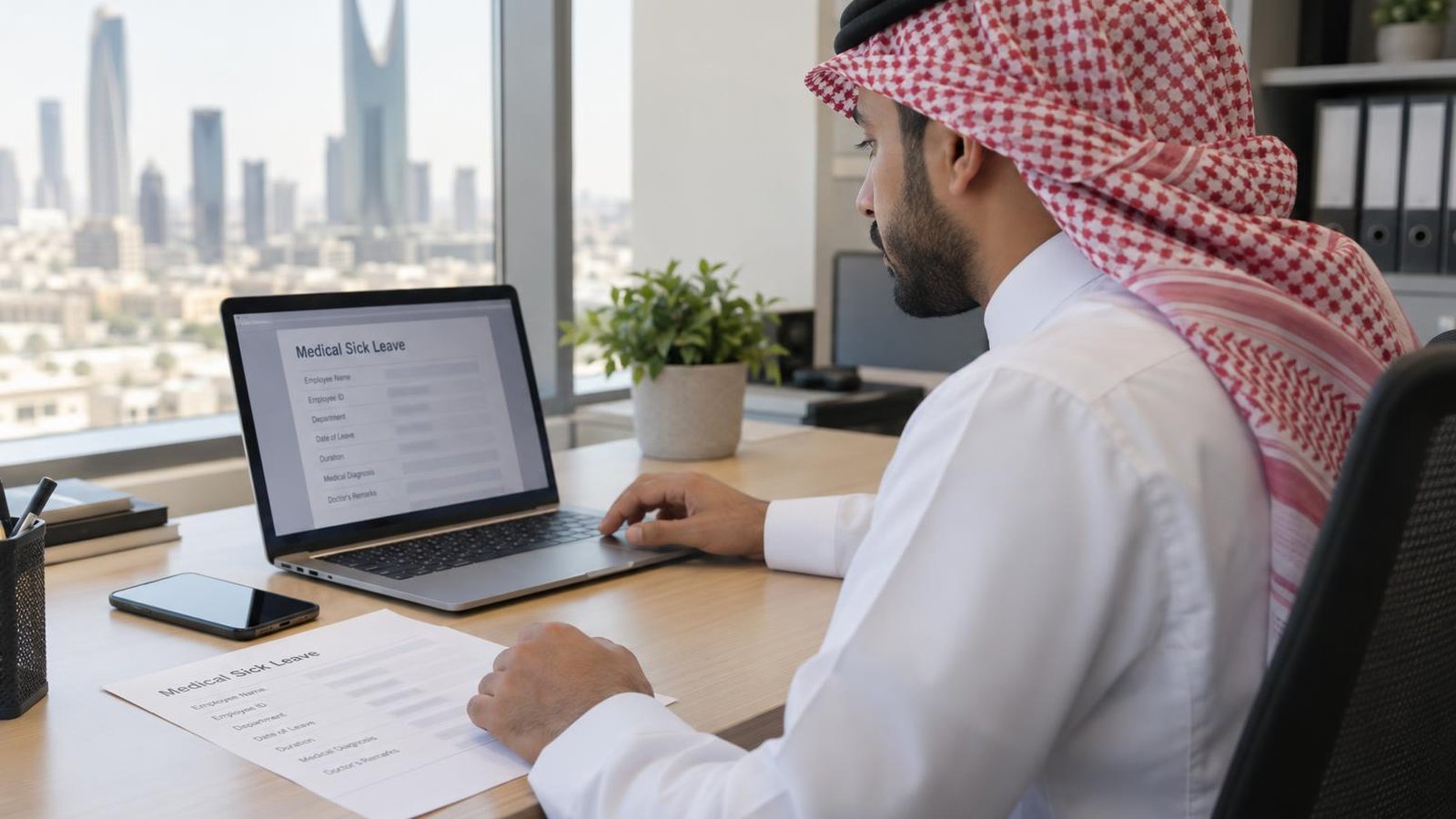
Fake sick leave in Saudi Arabia is now being traced back to the clinics and doctors that issue it. The Ministry of Health says a nationwide inspection campaign flagged 116,131 sick leaves for checks, found one health facility behind 70,753 of them, and has suspended access and referred violators to the competent authorities. The action covers facilities, practitioners and the people who obtained the leaves.
This report sets out what the ministry found, who can be punished, how to check a sick leave yourself on the official platforms, and what employees and HR teams should do now. For the full rules on sick pay, see our sick leave in Saudi Arabia guide.
What the Health Ministry found
The ministry announced the results on 23 November 2026, and they were carried by Saudi media including Ajel, Okaz and Sabq, and in English by Saudi Gazette. Field teams made 1,817 inspection visits across the Kingdom’s regions. The main findings:
| Finding | Number |
|---|---|
| Sick leaves flagged for a validity check | 116,131 |
| Leaves issued by a single health facility | 70,753 |
| Leaves issued by a single practitioner | 9,584 |
| Leaves one practitioner issued in a single day | 259 |
| Leaves linked to facilities breaking the rules | 46,279 |
| Inspection visits | 1,817 |
A doctor who examines each patient properly cannot issue 259 sick leaves in one working day. Numbers like these are what drew the inspectors in. According to the reports, the ministry acted against three groups: people who obtained more sick leaves than the rules allow or got them from unlicensed sources, practitioners who issued them, and facilities that did not follow the regulations. The measures include suspending the violators’ access to the sick leave system and referring them to the competent authorities.
Follow Saudi Life Guide for Iqama, visa and job updates
New rules, fees and news as soon as we publish them. Join 129,500+ followers on Facebook.
What counts as an illegal sick leave
The ministry set out the rules on 11 November 2026, two weeks before this campaign was announced. A sick leave is only valid when:
- it is issued by a licensed health facility, through the official electronic system,
- a doctor has examined the patient and decided the leave is medically needed (it is not given because the patient asks for it), and
- it can be found on the official platforms, Sehhaty and Seha.
That makes three kinds of leave illegal: a leave bought online or from a social media account, a leave issued without a real examination, and a document that was edited or made up. The ministry has repeatedly told the public never to buy a sick leave from a website or an account on social media.
Penalties for fake sick leave
The latest announcement does not list fines. The penalties come from the Law of Forgery Crimes, which the ministry has cited when warning about fake leaves (reported by Okaz on 11 November 2026, and by Argaam from the ministry in March 2025):
- knowingly forging or issuing a false medical report, or using one, can mean up to one year in prison and a fine of up to SAR 100,000, and
- under Article 23 of the same law, a health facility shown to be involved can also be held liable.
For a practitioner, a suspended account means they cannot issue sick leaves until the case is settled. For an employee, being found with a bought leave can also lead to problems at work, because the absence was never really excused. Our Article 77 guide explains how contracts can end and what compensation applies.
How to check a sick leave on Sehhaty and Seha
Every valid sick leave is stored electronically. You can check one in two ways:
- Sehhaty app (employee): open the app, sign in with Nafath, and look under your sick leaves. Every leave issued in your name appears there with its dates and the facility that issued it. If a leave is not in Sehhaty, it is not a valid electronic leave.
- Seha inquiry page (employer or HR): go to the sick leave inquiry service on the official Seha platform, enter the leave number and the employee’s ID or iqama number, and compare the result with the document you received: name, dates, facility and doctor.
Do not rely on a photo of a sick leave or on the QR code printed on it. The ministry has warned that QR codes on fake documents can lead to fake websites that show a convincing “valid” page. Type the official address yourself. The ministry’s own Sehhaty sick leave page explains the service.
What employees should do
- Get sick leave only from a doctor who examines you at a licensed clinic or hospital, or through an official telemedicine service.
- Check that each leave appears in Sehhaty before you send it to your employer.
- Never pay a website, WhatsApp number or social media account for a sick leave, even if it says the leave will be “registered in the system”.
- If someone offers to sell you a sick leave, report it to the ministry on 937.
If you are genuinely ill, the Labour Law protects your pay: full wages for the first 30 days of sick leave in a year, three quarters for the next 60 days, and no pay for the following 30 days. The details, including how this works with annual leave, are in our sick leave rules guide.
What employers and HR teams should do
- Check every sick leave on the Seha inquiry page instead of accepting a PDF or a photo at face value.
- Watch for patterns: many leaves from the same small clinic, leaves issued far from where the employee lives, or leaves that always fall next to weekends.
- Keep a record of each check, with the date and the result, in the employee’s file.
- Treat a leave that cannot be found on Seha as unverified, ask the employee for an explanation, and follow your written disciplinary rules and the Labour Law before taking any step.
For disputes about pay or dismissal that follow, the process starts with a complaint on the MHRSD system and an amicable settlement stage. Our Labour Court guide walks through it. Employers should also make sure staff have valid cover under their medical insurance, so workers can see a licensed doctor when they need one.
Why this matters for expats
Sick leave touches almost every worker, and fake leave sellers often target expats through Facebook pages and WhatsApp groups with cheap “approved” leaves. The ministry’s figures show that the system can see where every leave came from, which doctor issued it and how many that doctor issued in a day. A bought leave is no longer a small shortcut: it is a record in your name that inspectors can trace.
Sources: Ministry of Health announcement of 23 November 2026 as reported by Ajel, Okaz, Sabq and Saudi Gazette; Ministry of Health guidance of 11 November 2026 (Okaz, Saudi Gazette, Sabq); Law of Forgery Crimes penalties as cited by the ministry (Okaz; Argaam, March 2025); HRSD on sick leave pay; Seha and MOH Sehhaty pages.
FAQs about fake sick leave in Saudi Arabia
How many sick leaves did the Health Ministry flag?
The ministry flagged 116,131 sick leaves for a validity check after 1,817 inspection visits, announced on 23 November 2026. One facility had issued 70,753 of them and one practitioner 9,584.
What is the penalty for fake sick leave in Saudi Arabia?
Under the Law of Forgery Crimes, knowingly issuing or using a false medical report can mean up to one year in prison and a fine of up to SAR 100,000. Practitioners and facilities can also have their access suspended and be referred to the authorities.
Can the person who bought the sick leave be punished?
Yes. The ministry says its action covers people who obtained leaves from unlicensed sources or more leaves than the rules allow, not only the clinics and doctors.
How do I check if my sick leave is valid?
Open the Sehhaty app and look under your sick leaves, or use the sick leave inquiry on the Seha platform with the leave number and your ID or iqama number. A leave that does not show there is not a valid electronic leave.
Is a QR code on a sick leave enough proof?
No. The ministry warns that QR codes on fake documents can open fake websites. Always type the official Seha address yourself and check the details there.
Where do I report someone selling sick leaves?
Call the Ministry of Health on 937. Do not send money or personal documents to the seller.