


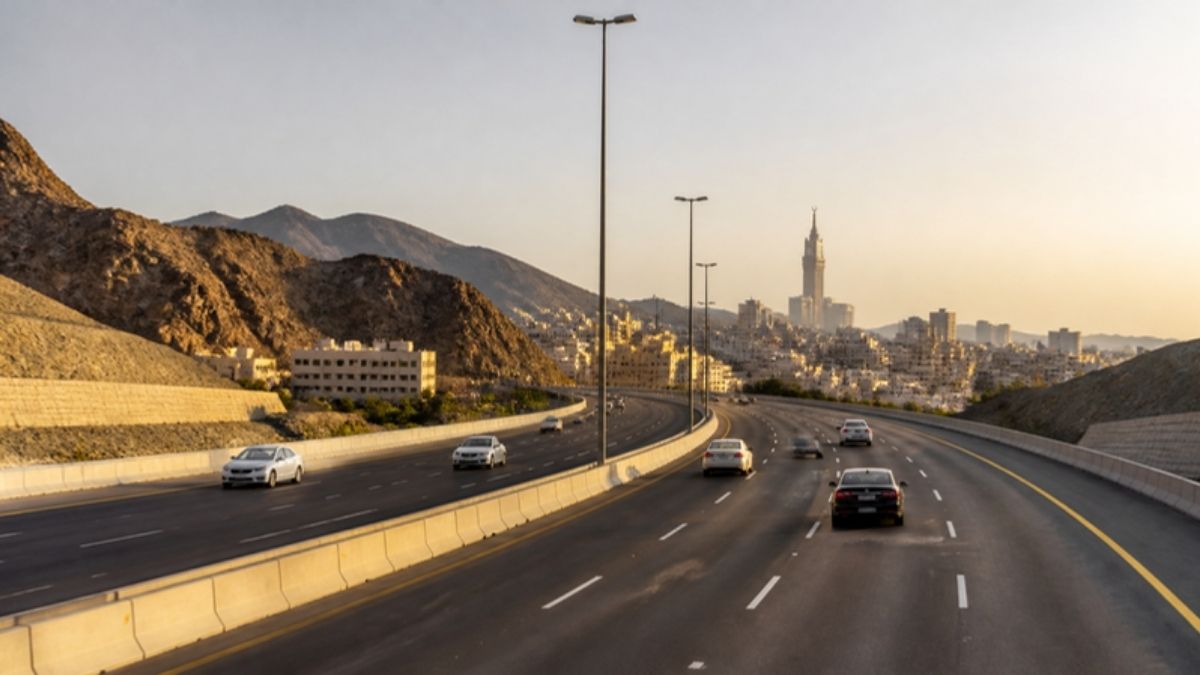
The Makkah Third Ring Road is now open along its western link, cutting the drive from the Prince Mut’ab intersection to the Grand Mosque from 16.5 km to 6.5 km. The Royal Commission for Makkah City and Holy Sites announced the opening on 27 October 2026 and says travel times to the Haram and to the Jamarat in Mina can fall by up to about 90%.
For the many expat families in Jeddah, Taif and Makkah itself who drive in for Umrah or Friday prayers, this changes the route into the city.
What opened on the Makkah Third Ring Road
The new section completes the western part of the Third Ring Road, one of four ring roads around Makkah. It runs from the Prince Mut’ab intersection to the Masjid al-Haram intersection, passing the Prince Sultan intersection.
The Royal Commission has published these figures:
| Route from Prince Mut’ab intersection | Before | After |
|---|---|---|
| To the Grand Mosque (Masjid al-Haram) | 16.5 km | 6.5 km |
| To the Jamarat facility in Mina | 12 km | 4 km |
- Capacity: up to 170,000 vehicles a day in both directions.
- Areas served directly: Al-Mursalat and Al-Aziziyah.
- Travel time: up to about 90% shorter, according to the Commission’s project impact indicators.
The distance cut is about 60% to the Haram and about 67% to the Jamarat. The bigger 90% time saving reflects the Commission’s estimate of avoided congestion, not just fewer kilometres. It has not published the minute figures behind it.
This builds on September’s work. On 26 September the Commission opened an extra 1.5 km of the same corridor, along with the remaining stretch of Prince Saud Al Faisal Road between the Prince Mohammed bin Salman Axis and Abdulqader Koshak Street.
Follow Saudi Life Guide for Iqama, visa and job updates
New rules, fees and news as soon as we publish them. Join 107,000+ followers on Facebook.
Who benefits
The clearest winners are residents of Al-Aziziyah and Al-Mursalat, where many expat workers and hotel staff live, and anyone heading to the Haram from the eastern side of the city. In practice, the stretch between Aziziyah and the central area is where Umrah traffic has always crawled, especially on Thursday nights and Fridays. For quieter slots, see our guide to the best time for Umrah.
Pilgrims staying in Aziziyah hotels and drivers working for Umrah transport companies should also see shorter trips. During Hajj, the shorter link to the Jamarat matters for service vehicles moving between Mina and the city.
What drivers should do now
- Update your maps app. Map apps can take a few days to pick up a newly opened link, so do not ignore the new signs if your app still routes you the old way.
- Follow the road signs at Prince Mut’ab and Prince Sultan intersections. Lane layouts near newly opened junctions often change in the first weeks.
- Remember the central area rules still apply. Access controls, parking restrictions and park-and-ride arrangements around the Haram are unchanged. A faster road does not mean you can park closer.
- Drive to the conditions. Speed cameras and Muroor enforcement cover the ring roads, and violations are recorded against your iqama on Absher. Here is how to check traffic violations.
What has not changed
Entry rules for Makkah, Umrah permit requirements on Nusuk, and the restriction on non-Muslims entering the Haram area are not affected by the new road. The Commission has not said whether further sections of the Third Ring Road will open this year, or given the length and lane count of the new link. Updates are posted by the Royal Commission for Makkah City and Holy Sites, and traffic violations can be checked through Absher.
If you drive into Makkah regularly, try the new link on your next trip. It should save real time.
Leaving the car behind: Makkah Bus and the train
A faster ring road helps you reach the edge of the central area, but parking near the Haram is still limited. Many expat families drive to the outskirts and finish the trip by public transport.
- Makkah Bus: the city network has 12 routes, 400 buses and 431 stations covering 580 km, according to figures reported by SPA in January 2026. It is run by the General Transport Center under the Royal Commission. A newer route links the Grand Mosque with the Hira Cultural District, home to the Revelation Exhibition and the Cave of Hira.
- Haramain train: if you live in Jeddah or Madinah, the high-speed train avoids the drive altogether. See our Haramain train guide for stations, tickets and luggage rules.
Plan ahead for the Hajj season
The new road does not change the seasonal entry rules for Makkah. Before Hajj 2026, Public Security started Makkah entry procedures on 13 April 2026, and residents without a valid permit were refused entry to the city.
Residents were exempt if they held one of these:
- A permit to work in the Holy Sites, issued by the relevant authorities
- An iqama issued in Makkah
- A valid Hajj permit
Permits for residents working during the Hajj season were issued electronically through Absher Individuals and Muqeem, linked to the Tasreeh system. If similar controls are announced before the next Hajj and your iqama was issued in Jeddah or Taif, the new ring road will not get you past the checkpoints without a permit. Check official announcements each year before you set off.
Tips for a smoother trip into Makkah
- Time your visit. Traffic builds up most before Friday prayers and on Thursday nights. Our guide to the best time for Umrah lists quieter slots.
- Agree a meeting point. The crowds near the Haram make it easy to lose family members. Pick a numbered gate or a fixed landmark such as the clock tower before you split up.
- Keep your documents on your phone. Have your iqama on Absher and your Nusuk permit ready for checks.
- Know what to do if you lose something. Read our guide to lost items at the Grand Mosque before your visit.
If you are new to the city, our list of places to visit in Makkah covers sites you can now reach more easily from the eastern districts.
Frequently asked questions
How much shorter is the new route to the Haram?
From the Prince Mut’ab intersection, the distance drops from 16.5 km to 6.5 km.
Does the new road let me park closer to the Haram?
No. Access controls and parking restrictions in the central area are unchanged.
Can residents of other cities drive into Makkah during Hajj?
Before Hajj 2026, residents needed a Holy Sites work permit, a Makkah-issued iqama or a valid Hajj permit to enter the city. Check the rules each season.
Is there public transport inside Makkah?
Yes. Makkah Bus runs 12 routes across the city, including routes to the Grand Mosque.